

SCOTTISH ENDURO • CLUBS • VOLUNTEERING
Ever wondered what happens on the other side of the race tape? Marshalling is a way to support Scottish enduro, meet the people who organise it and experience an event from a different perspective. And, depending on the role, you might even get out on your own bike.
At a Scottish Hare & Hounds or Time Card Enduro, the riders are only part of the story. Volunteers help with course checks, timing areas, rider safety and the countless small jobs that make a race day possible. Some work in one place; others are authorised to move around the course. If you've raced for years, are thinking of entering your first event or simply want to help the sport, here are five good reasons to consider it.
Quick answer: You do not necessarily need to race to help. Clubs may have on-foot, paddock and course-side roles as well as travelling marshal positions. Riding the route is not guaranteed: it is only for people given the appropriate role and permission by the organiser.
1. You help keep Scottish enduro events running
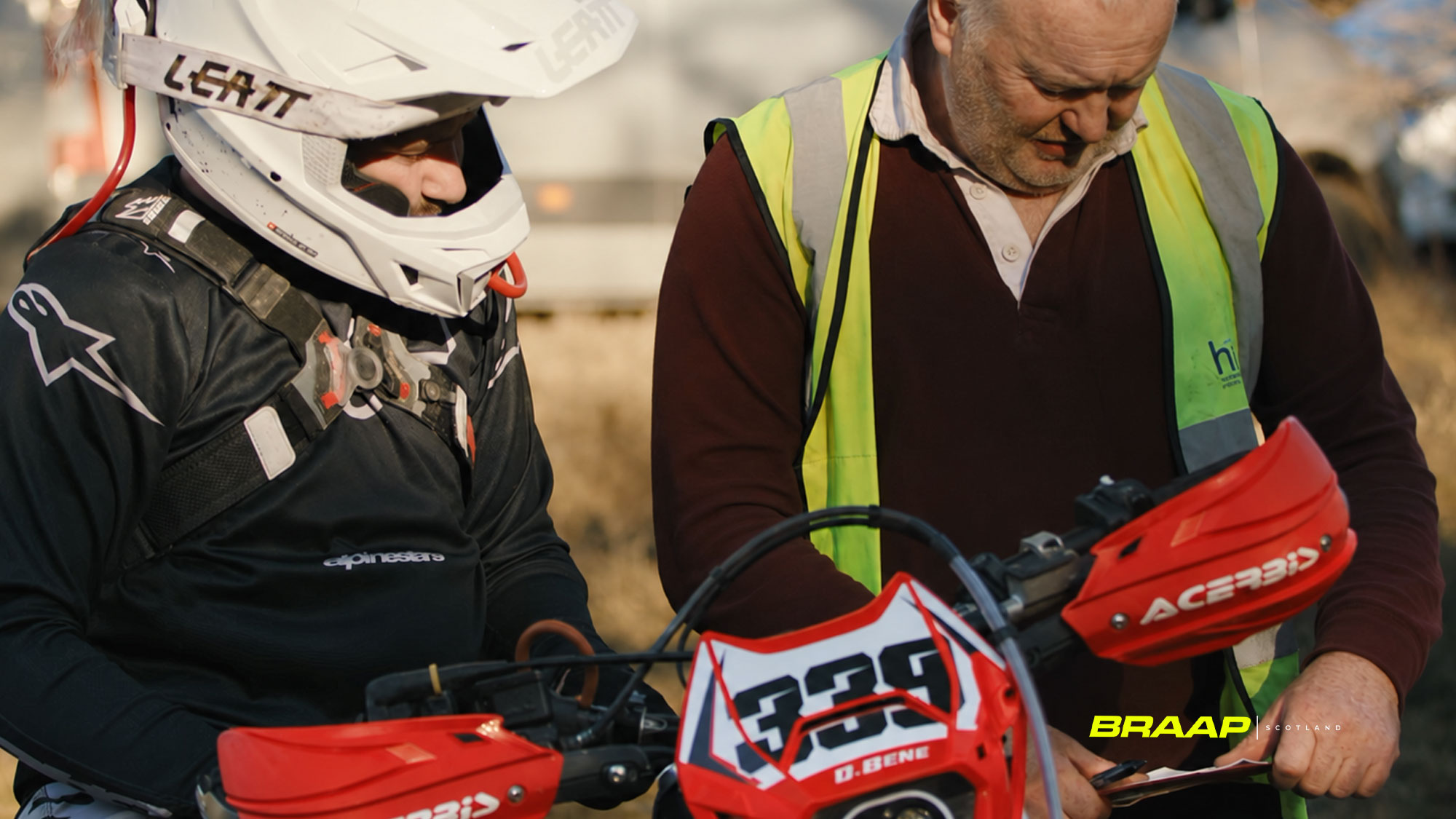
A race can have an excellent venue and a full entry list, but it still needs people on the ground. Before the first rider starts, somebody has marked the route, prepared control points, checked access and helped get the paddock ready. During the event, somebody needs to be available when signs move, a section becomes difficult or an incident is reported.
This is especially important at enduro events, where courses can cover large areas of forestry and farmland. Conditions change as the bikes pass through, and a dry section can become a very different challenge after heavy rain. Volunteering for a day is a practical way to help the club that gives riders somewhere to compete.
It also matters beyond one weekend. Scottish off-road events depend on permissions, landowners, officials and a small community willing to put in considerable effort. Helping a club gives that effort a little more support.
2. Some marshal roles involve riding your own bike
This is an attraction that often gets overlooked. Enduro courses are spread out, and some organisers use travelling marshals on motorcycles to move between assigned areas, check the route and respond to problems. For an experienced off-road rider, that can mean a day on interesting terrain while doing something useful.
It is important to understand the difference between marshalling and a practice day. A travelling marshal rides where the organiser instructs, for a specific job. You are not signing up for unrestricted laps, a chance to race the test or permission to explore surrounding forestry.
The 2026 SACU Enduro Standing Regulations explicitly refer to travelling marshals. They say marshals should normally travel in the direction of the competitors or use alternative routes, and that travelling marshals should wear orange high-visibility vests and have M plates on their bikes. The exact arrangements, bike requirements, insurance and duties must still be confirmed with the organising club.
Ask the organiser: Do you need travelling marshals? Must I bring my own motorcycle? Does it need to be road-legal for any public-road sections? What riding experience, identification and safety kit do you require?
3. You can see the racing from a different perspective
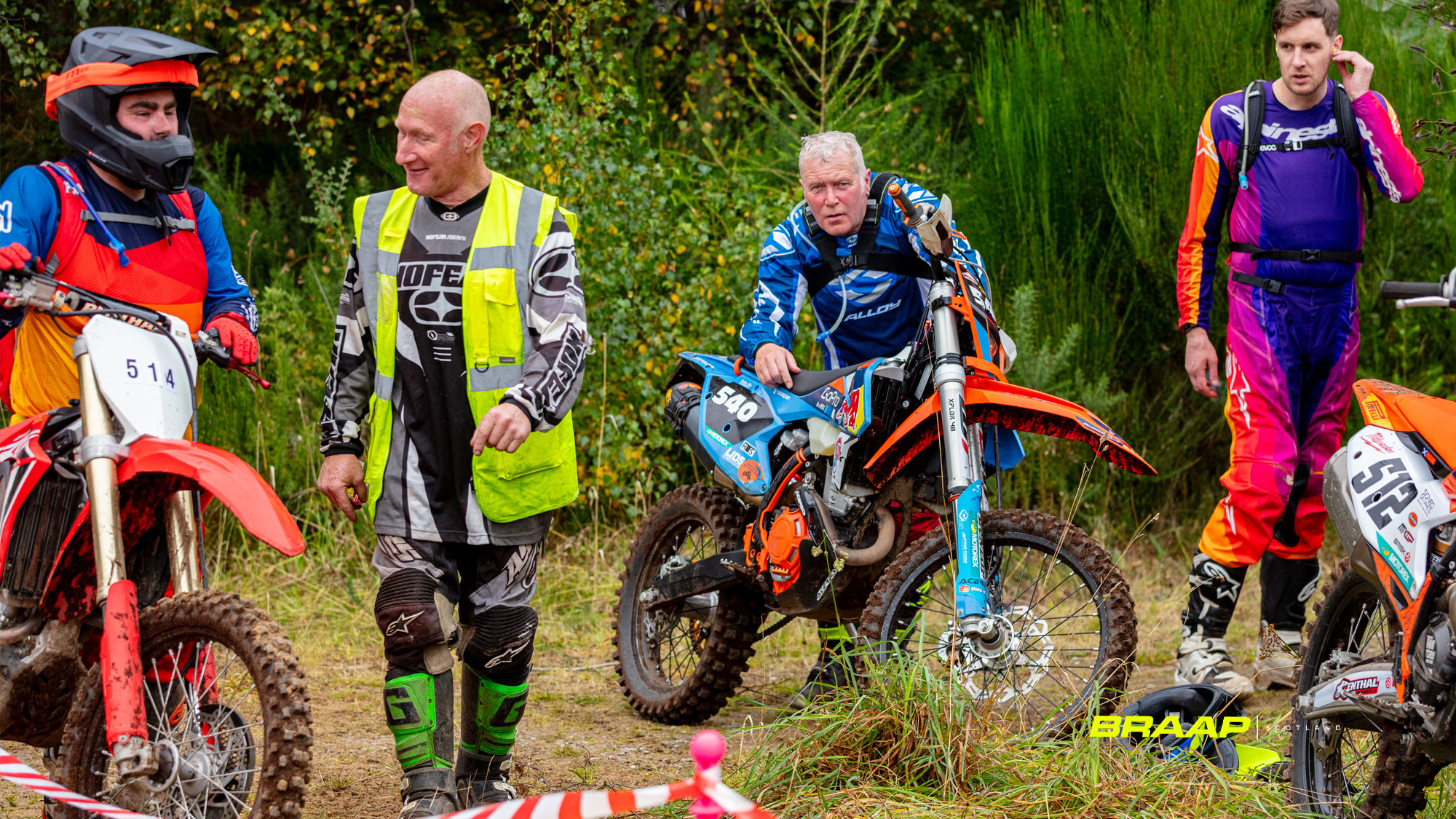
Watching a forest enduro is not always straightforward. Parking can be limited, access may be restricted and riders might pass a particular point for only a few seconds. A marshal, by contrast, is given a defined place to be or a route to cover as part of the event operation.
Depending on your assignment, you may see the starts, a tricky crossing, a time control or a section of the course where riders really have to work. You get a closer understanding of the effort behind the race, rather than just a brief glimpse of a bike disappearing into the trees.
That does not mean standing wherever you like. Marshals must follow the briefing and stay in safe, authorised positions. Keeping riders and the public safe matters more than getting a better view.
4. You learn how the sport actually works
If you have only ridden Hare & Hounds, marshalling at a Time Card Enduro can open your eyes to a completely different format. You see how the start, checkpoints, route marking and timed tests fit together. You also see the preparation and decisions that competitors rarely notice.
That knowledge is useful if you plan to enter a race later. It can help you understand why clear route markings matter, how events are managed and why riders need to listen carefully to briefings. It is also an opportunity to ask sensible questions of experienced volunteers and officials when they are not busy.
New to the formats? BRAAP has a Time Card Enduro guide, plus a broader Scottish Enduro introduction.
5. You meet the people who make the sport happen
Much of the appeal of enduro is the community around it. A day helping out introduces you to club volunteers, officials, experienced riders and people who put on events year after year.
You do not need to be the fastest person in the paddock to be useful. You might already know the club through competing, or you might be a parent, partner or friend who wants to contribute. It is another way to belong to the sport without needing a race number.
And if you have enjoyed a well-run event, giving some of your time back is a decent way to say thanks.
Want to help at an event?
Start with a Scottish enduro club. Tell them what you can do, where you are based and whether you have a suitable motorcycle for an authorised travelling-marshal role.
FIND A SCOTTISH ENDURO CLUB →VIEW ENDURO EVENTS →What does an enduro marshal actually do?
There is no single job description that fits every event. A club might need people to help with signing on or paddock organisation, staff a control point, watch a specific area, check course marking or report incidents. Experienced, authorised travelling marshals may be asked to move between locations, check the course or help a rider in difficulty under the organiser's instructions.
The important part is doing the job you've been briefed to do. If a rider is injured, alert the designated medical or event team and follow the emergency procedure; do not assume that volunteering makes you a qualified medic. Do not enter an active course or move tape without authorisation.
A marshal's day can also involve long periods outdoors, occasional bursts of activity and work after the final rider has finished. It is not all action from start to finish.
Can you marshal if you've never raced?
Potentially, yes. Some jobs suit newcomers, provided the organising club offers an appropriate briefing and supervision. Other duties need experienced riders, course knowledge, specialist equipment or particular competence. If you are new, say so. A club can tell you whether it has a suitable role.
You do not have to offer a bike if you do not have one. A helpful volunteer on foot can be just as valuable as a travelling marshal.
What should you bring for a day marshalling?
- Weatherproof clothing and sturdy footwear: Scottish enduro days can be long, wet and cold.
- Water, food and a charged phone: Ask what the club supplies rather than assuming lunch or equipment will be provided.
- Any organiser-requested equipment: Such as a radio, high-vis vest or route information. Confirm what is issued on arrival.
- If riding: Your normal protective kit and a properly prepared motorcycle that meets the organiser's requirements.
- Enough time: Ask when you are needed and when you can expect to be released. The job may start early or continue after the racing.
Check the location and parking arrangements in advance. A remote meeting point can be very different from turning up at a motocross track.
How do you volunteer at a Scottish enduro event?
- Find a club or event: Use the BRAAP Scottish Enduro Clubs guide and event calendar.
- Contact the organiser: Tell them which date you can help, whether you ride and what experience you have.
- Ask about the role: Confirm duties, briefing, arrival point, equipment, insurance/permission requirements and whether you will be based on foot or authorised to ride.
- Turn up ready to help: Listen to the briefing, follow the event's safety arrangements and make the day easier for the organisers.
A message you can send: “Hi, I'd be happy to help marshal at one of your upcoming enduro events. I live in [area] and can help on [date]. I have [riding/event experience], and I [do/do not] have a suitable off-road bike. Do you need any volunteers, and what would the role involve?”
See the kind of event your help supports
BRAAP's film from Drumtochty shows the scale, terrain and atmosphere of a Scottish Time Card Enduro weekend. It is a race documentary, not a marshal training video, but it gives a feel for why these events are worth keeping alive.
BRAAP Scotland — Brutal Enduro: Why Riders Love Drumtochty (2026).
Watch the full Drumtochty film on YouTube → · Explore the Drumtochty event page →
Give a day back to the sport
The next time you see a club asking for helpers, consider putting your name forward. You may get a day riding as an authorised travelling marshal; you may spend it at a checkpoint or helping behind the scenes. Either way, it is a chance to support the people who make Scottish enduro possible.
Find your next way into Scottish enduro
Check who is organising events, contact a club and offer your help. For more of the racing itself, explore BRAAP's films and rider stories.
FIND CLUBS →WATCH BRAAP FILMS →