

Behind the Scenes at Wooler Timecard Enduro
Go behind the scenes with BRAAP Scotland at Wooler Timecard Enduro, from a hot, dusty Saturday to a soaking wet Sunday, covering filming, comms, camera setup, data handling and the edit that follows.
Covering an enduro event is a lot more than standing at the side of a track with a camera.
Wooler Timecard Enduro was a good example of just how much goes into producing one of the BRAAP Scotland event films — from planning camera positions and coordinating a small crew, through two completely different days of weather, to backing up and organising the footage before the edit even begins.
Saturday was dry and hot.
Sunday was very different.
By the end of it, I was considerably wetter than the camera.
Covering More Than One Part of the Course
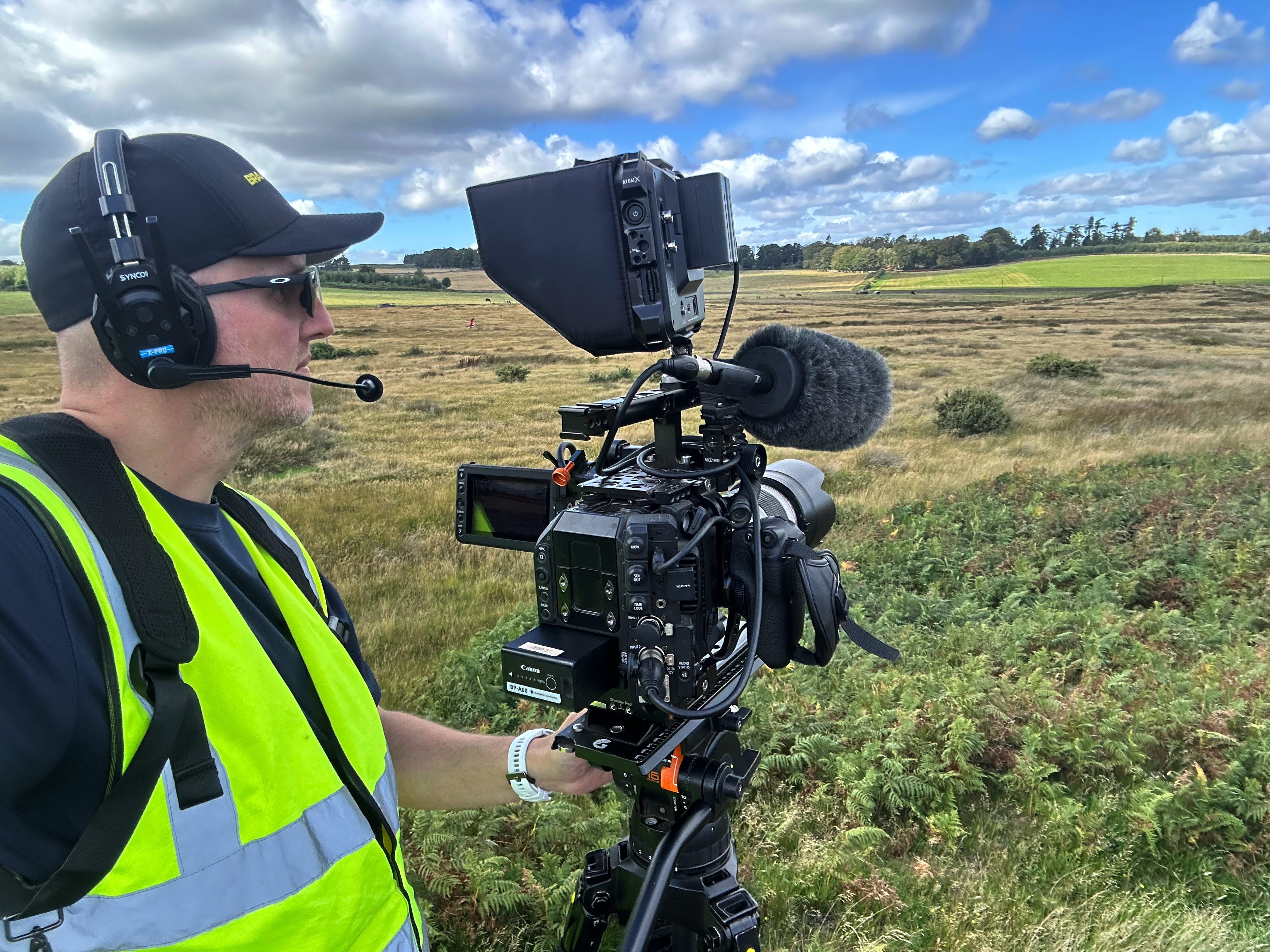
For Wooler, we were working as a small two-person filming team.
My wife was operating the second camera, and we used headsets to stay in communication throughout the event.
That might seem like a small part of the setup, but comms become extremely important when you are trying to cover an enduro course spread across a large area.
There is little value in both cameras repeatedly filming exactly the same section.
Being able to speak to each other meant we could coordinate where each of us was positioned, when one of us was moving to another location and which sections of the event had already been covered.
It also meant that if riders were approaching one camera position, we could give each other some warning.
When you are trying to build a film rather than simply collect random action shots, knowing what the other camera operator is doing makes a big difference.
Following Riders Across the Moorland
For some of the wider sections at Wooler I was using a Canon cinema camera setup on sticks.
Rather than trying to shoot everything handheld, the tripod allowed me to capture controlled panning shots as riders crossed the open moorland.
The external monitor is an important part of that setup.
It allows me to maintain a clear view of the frame while rotating the tripod through a wide arc — sometimes close to 180 degrees — and continue following the rider smoothly across the landscape.
Those longer shots help establish the environment as well.
With enduro, the landscape is a big part of the event. Showing a rider disappearing across open moorland gives a completely different sense of scale from simply filming a bike passing close to the camera.
The aim is always to come back with enough variety to build something that feels like the event rather than a collection of similar racing clips.
Then the Weather Changed
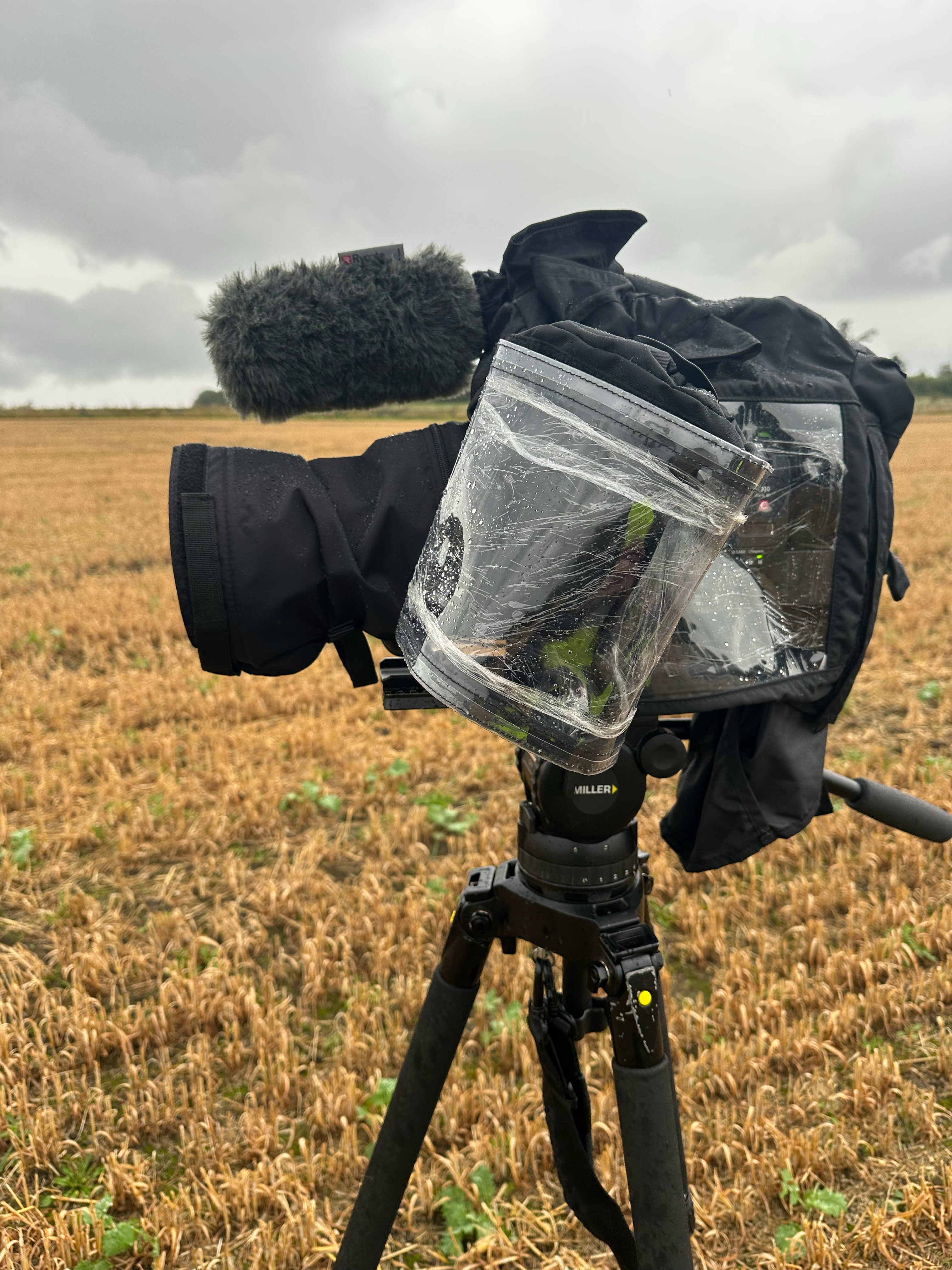
Saturday gave us dry, warm conditions.
By Sunday, the rain had arrived.
That changes the job considerably when you are working with cinema cameras, monitors, microphones and other electronics.
Rain covers became essential.
The priority becomes keeping the equipment protected while still being able to operate it properly and continue getting the shots.
By the end of Sunday, the rain protection had done its job.
The camera was considerably drier than I was.
It is one of those less glamorous parts of filming outdoor motorsport. The event does not stop because conditions become uncomfortable, so neither can the filming.
You protect the equipment as best you can and carry on.
The Film Isn't Just About the Racing
The Wooler film was never intended to be a straightforward highlights video.
Traditional timecard enduro has its own character, and I wanted the riders and organisers to help explain why the format still matters.
Alongside the race footage we recorded interviews and the atmosphere around the event.
Those conversations become important later.
Rather than writing a complete narration first and then finding pictures to match it, I can use the interviews to help discover the story.
Once you start working through what people have said, themes begin appearing.
Then the action footage, landscapes, paddock shots and smaller moments can be built around those voices.
When Filming Stops, Data Management Starts
Packing the cameras away does not mean the job is finished.
After an event like Wooler there are multiple memory cards, camera files, audio recordings and interviews that all need to be backed up and organised.
Some of that process started on the journey home.
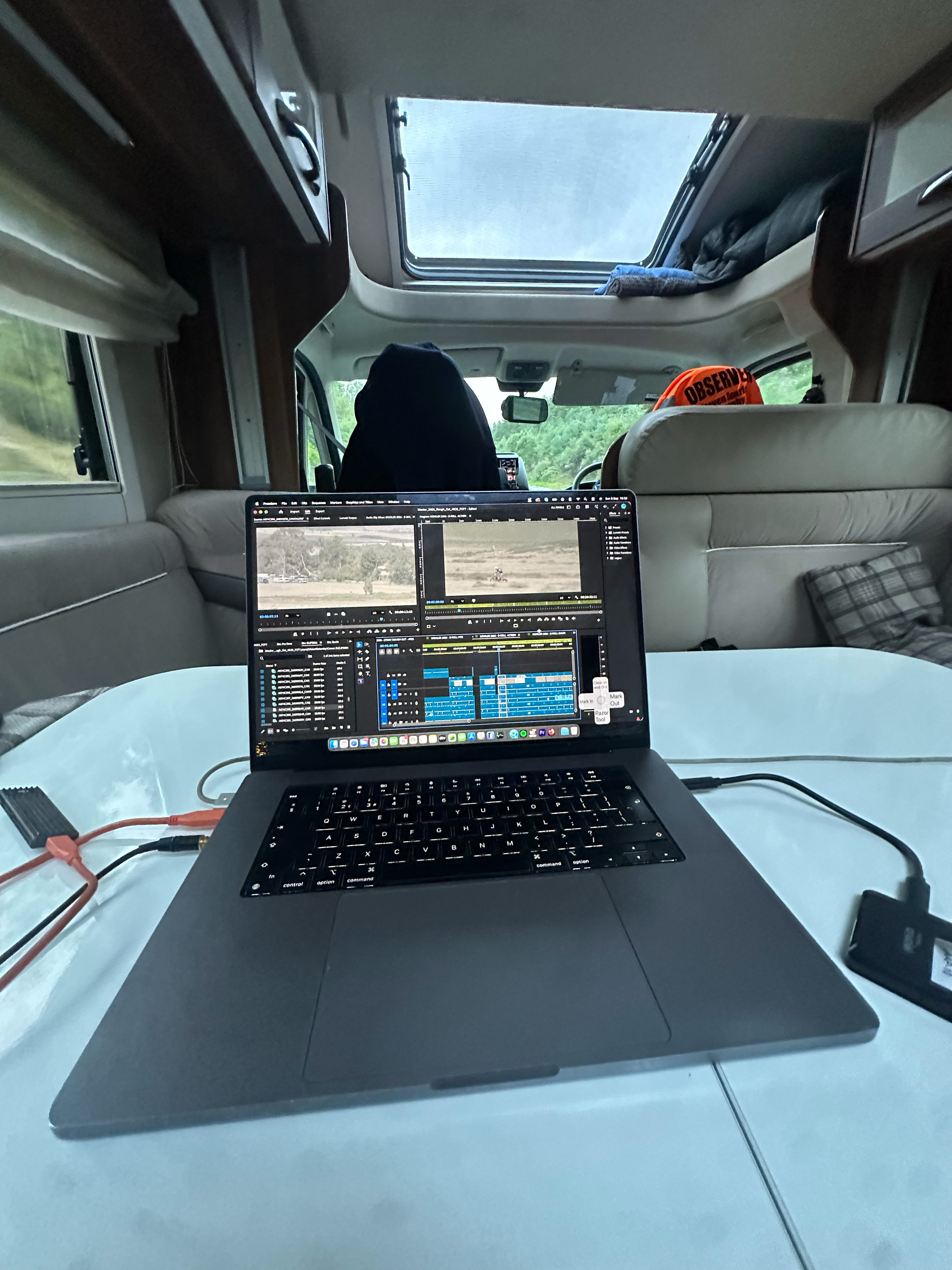
With the laptop set up in the camper, footage could begin being sorted and organised so that I wasn't arriving home with a pile of cards and no structure.
Good data management is not particularly exciting to look at, but it is one of the most important parts of the whole workflow.
Until the footage exists safely in more than one place, the job isn't really secure.
Building the Edit
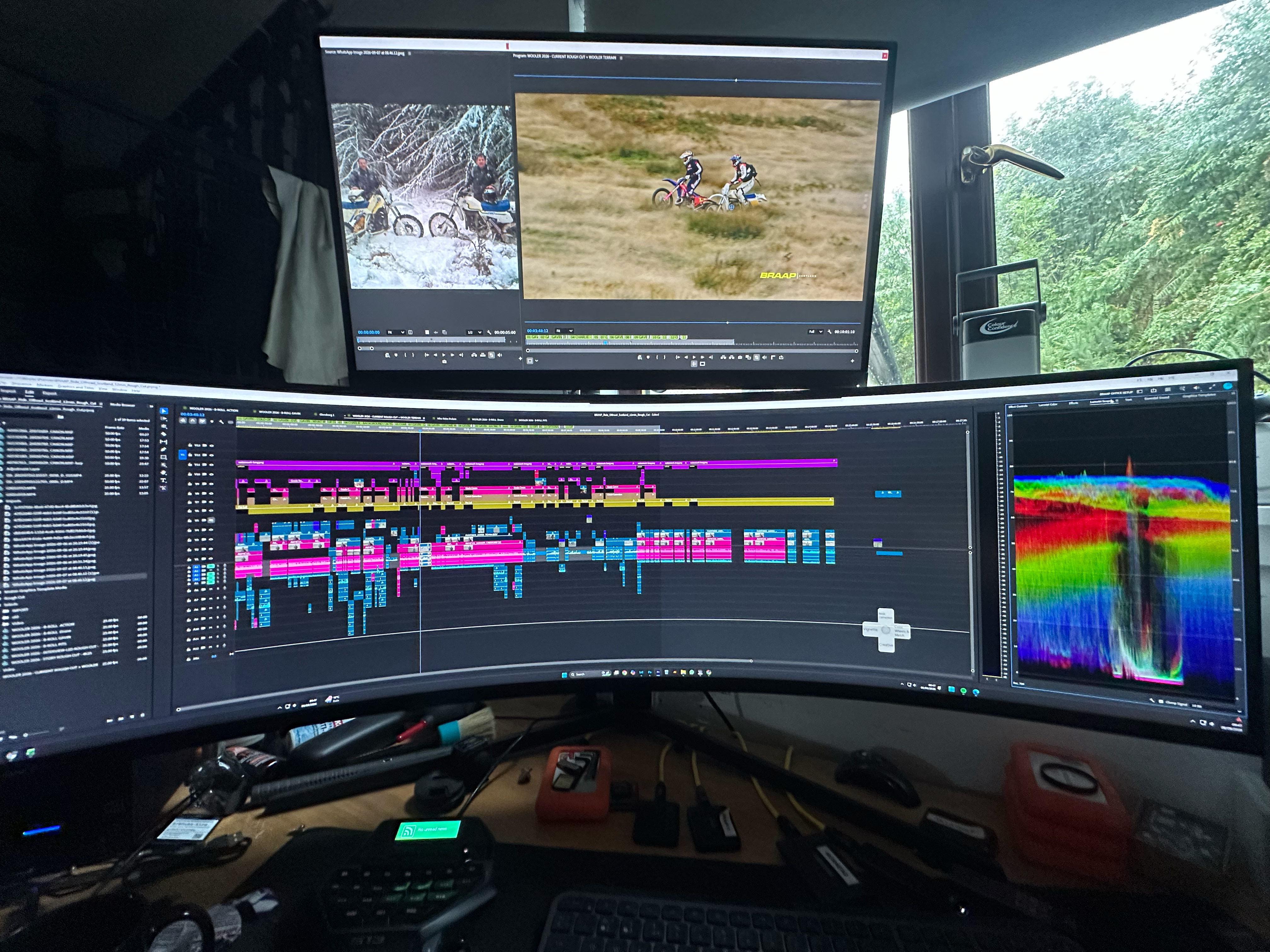
Once everything is home and backed up, the next stage happens at the edit workstation.
The footage is organised into the Premiere Pro project and proxies are created for the larger camera files.
Interviews are separated into their own sequences before I start pulling out the strongest answers.
From there, the rough narrative begins to form.
Then comes the considerably slower part — going through the race footage and finding the shots that actually support what people are talking about.
A rider talking about the terrain might lead into a wide shot across the moor.
A comment about the challenge of the event might need a completely different sequence.
A story about why somebody keeps riding enduro needs more than simply showing them passing the camera.
That is where a large timeline starts slowly turning into a film.
From the Moor to the Timeline
There is a big difference between the length of the finished video and the amount of work sitting behind it.
For Wooler, that process included two days on location, two camera operators, coordinating positions over comms, cinema cameras and audio equipment, changing weather, protecting equipment in heavy rain, interviews, travelling, backing up footage, organising media and then working through everything in the edit.
Most viewers will never see that side of the production.
And they probably shouldn't.
The finished film should simply feel like you were there.
But behind every few seconds on the final timeline there may have been a long drive, a wet camera position somewhere on the moor, a conversation over the headset and several different clips considered before one finally made the cut.
From a dry and hot Saturday to a very wet Sunday — then from the camper and the hard drives to the editing timeline.
That's what went into covering Wooler Timecard Enduro for BRAAP Scotland.