

BEHIND THE SCENES • SCOTTISH OFF-ROAD
By Steven Gourlay, BRAAP Scotland
There’s quite a bit that happens before a BRAAP film makes it onto YouTube. The riding is only part of it: there are batteries to charge, interviews to organise, equipment to carry around a hillside and footage to sort when the racing finishes.
These photographs give a look at my side of filming Scottish off-road motorcycling in 2026, from working trackside and in the forests to capturing interviews and starting an edit in the motorhome on the journey home.
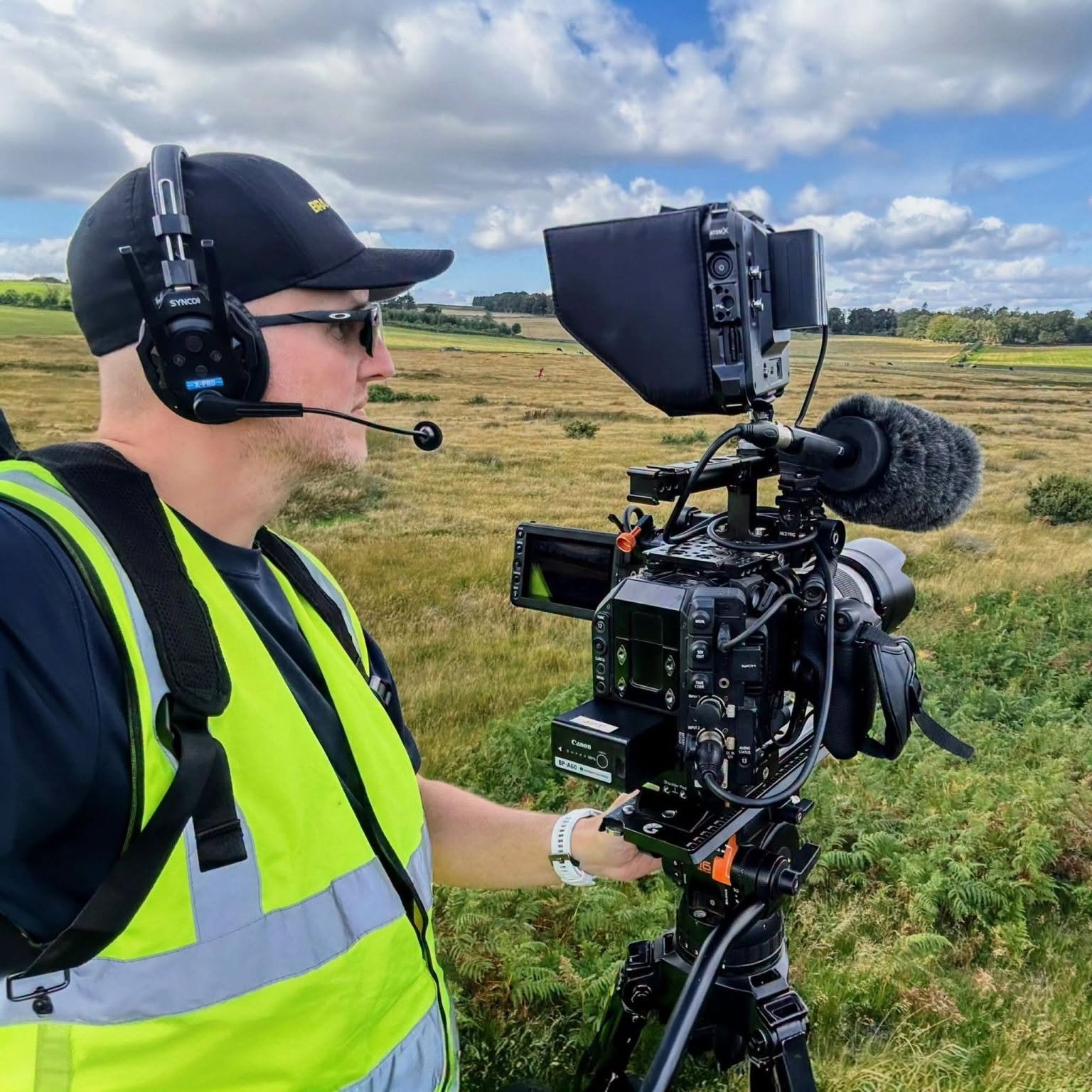
The work starts before leaving home
Preparation normally starts earlier in the week with the drone paperwork, checking airspace and arranging permissions. The day before travelling is when the charging and packing really get going.
Canon batteries, Ronin batteries, Inspire 3 batteries, action cameras, DJI and RØDE microphones, monitor batteries and the Jackery all need charging. I also check for at least 3TB of free space on the external SSDs, on top of the laptop’s 1TB of storage.
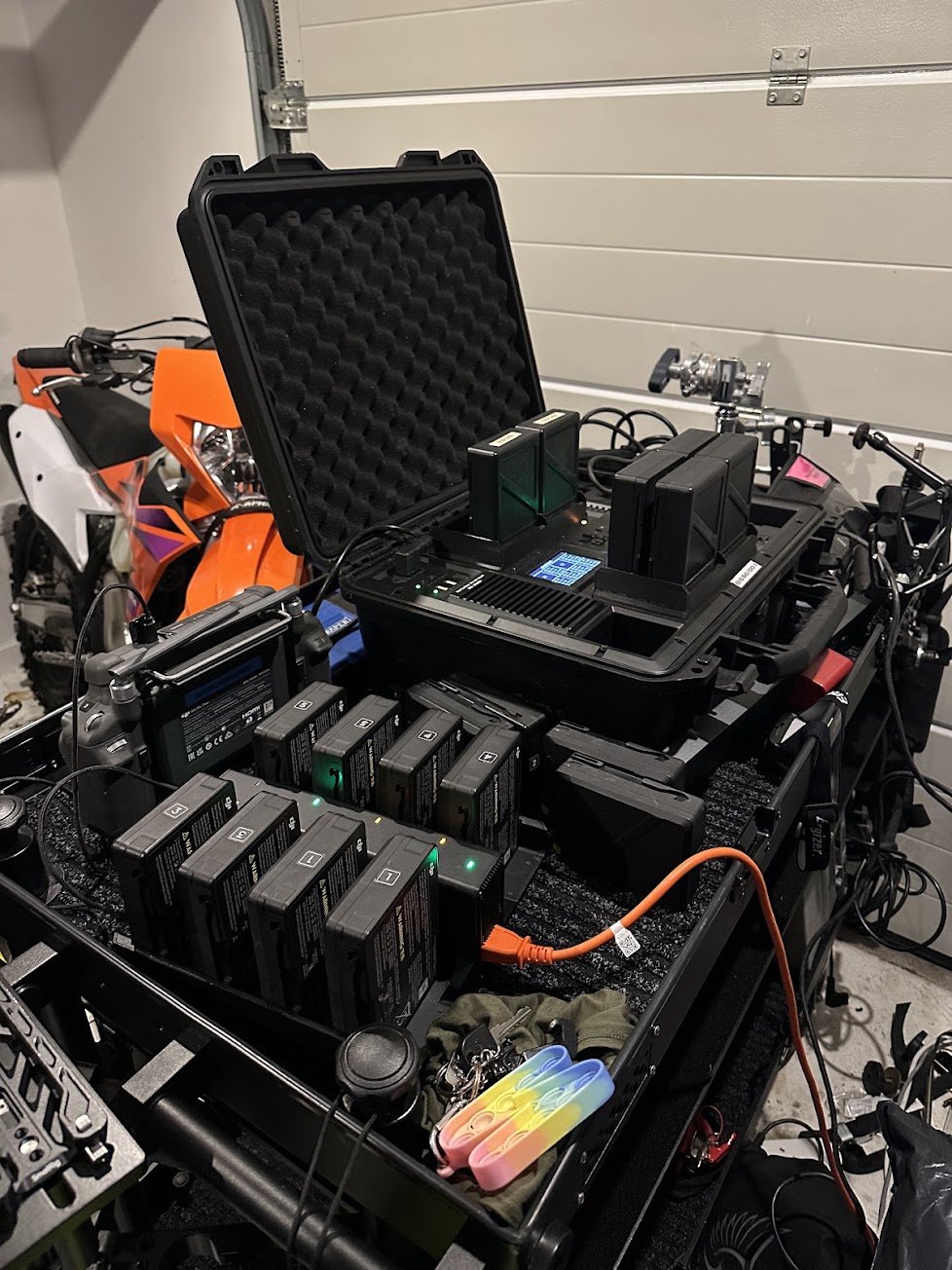
The cameras and drones have their own bags. The DJI Inspire 3 is my main drone, with the Inspire 2 packed as a backup. I check the audio cables, boom and windshield, sort the accessory pouches and load the tripods, stands, flags and diffuser panels. It’s a lot of separate things to account for before setting off.
I normally travel the night before and try to get a look around the course. At a new venue, that first visit is often a recce as much as anything else: getting a feel for the place and finding possible filming positions.
Before the engines start
If the weather allows, I like to capture the sunrise. It makes for a long day, but I love getting that quieter part of an event: the calm of the paddock, the early risers and people starting to get ready.
I’ll capture some of those extra shots, copy the first footage onto the laptop and set up for interviews. The aim is normally to get two or three conversations before heading out onto the course, with more footage of people preparing in between.
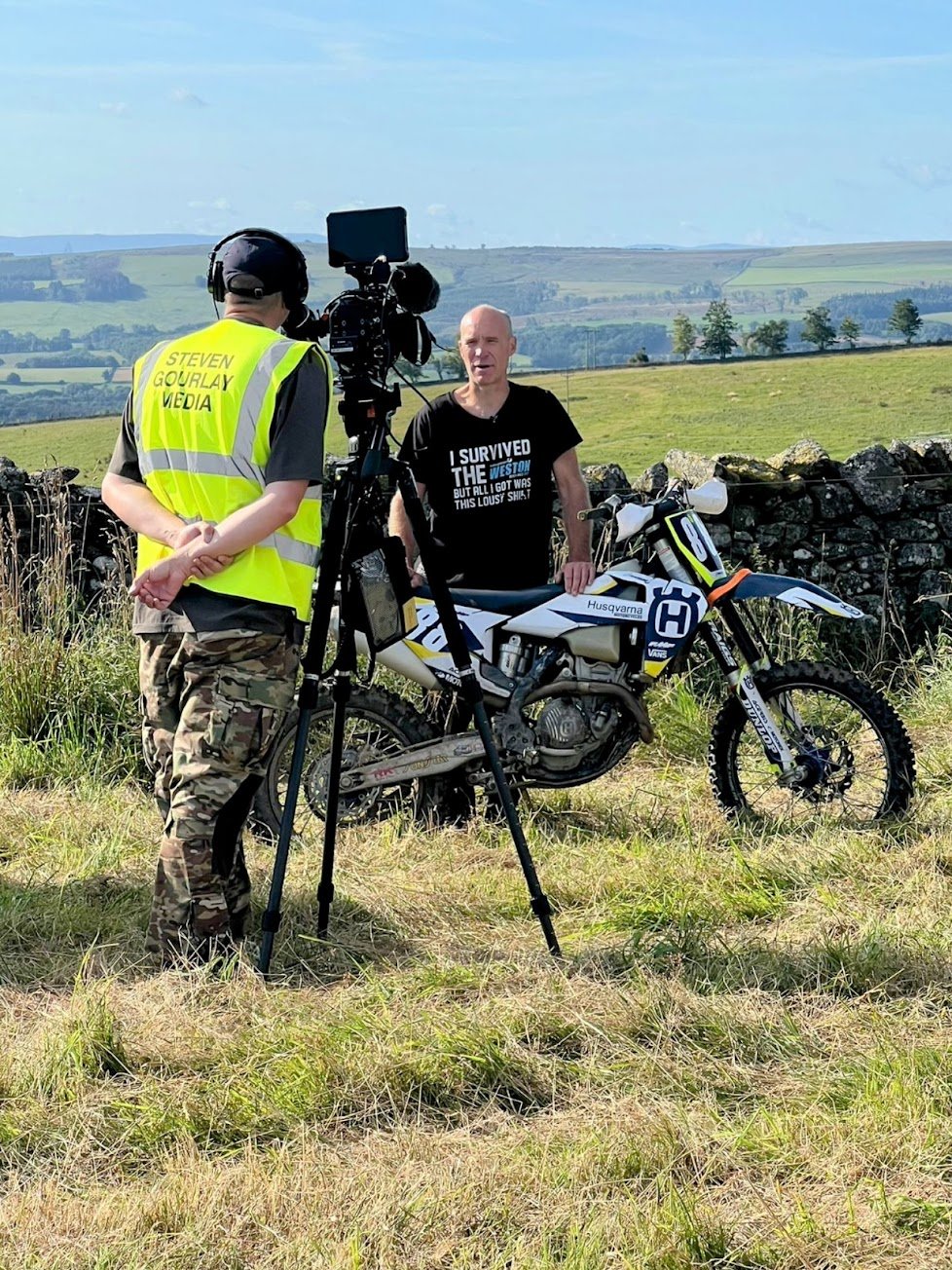
How much I can cover depends on the crew. If I’m on my own, I’ll try to capture riders setting off before working my way around the course and filming what I can. With an assistant, we can share the camera work.
Different views of the same race
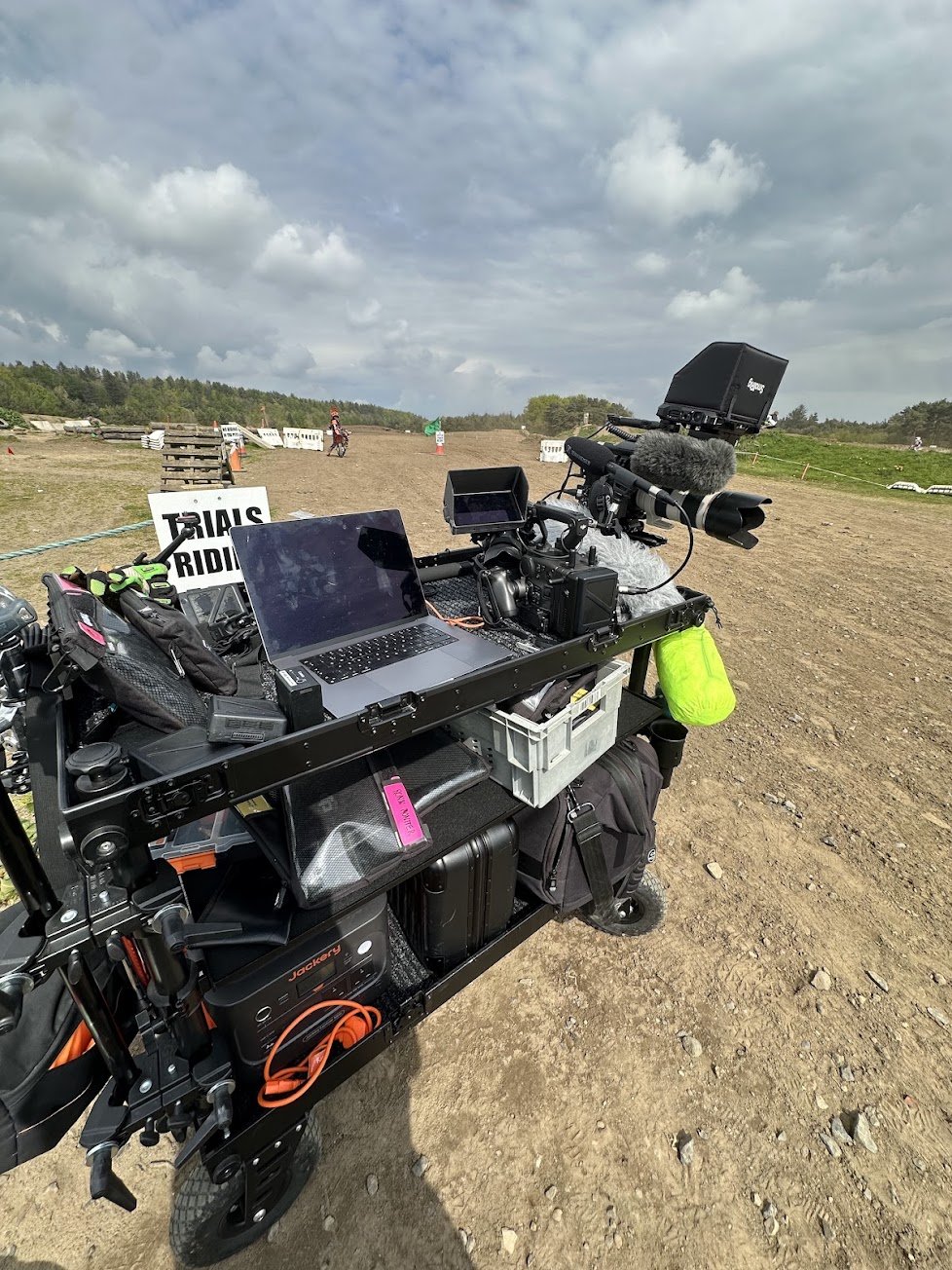
At Glendearg, I used the Canon C300 Mk III with a zoom lens on a tripod for smooth panning shots. The larger monitor gives me a better view when following the riders.
The photograph from Lossiemouth shows the two-camera setup: the Ronin 4D for wide shots and the Canon for the closer views with the zoom. They each have a job to do.
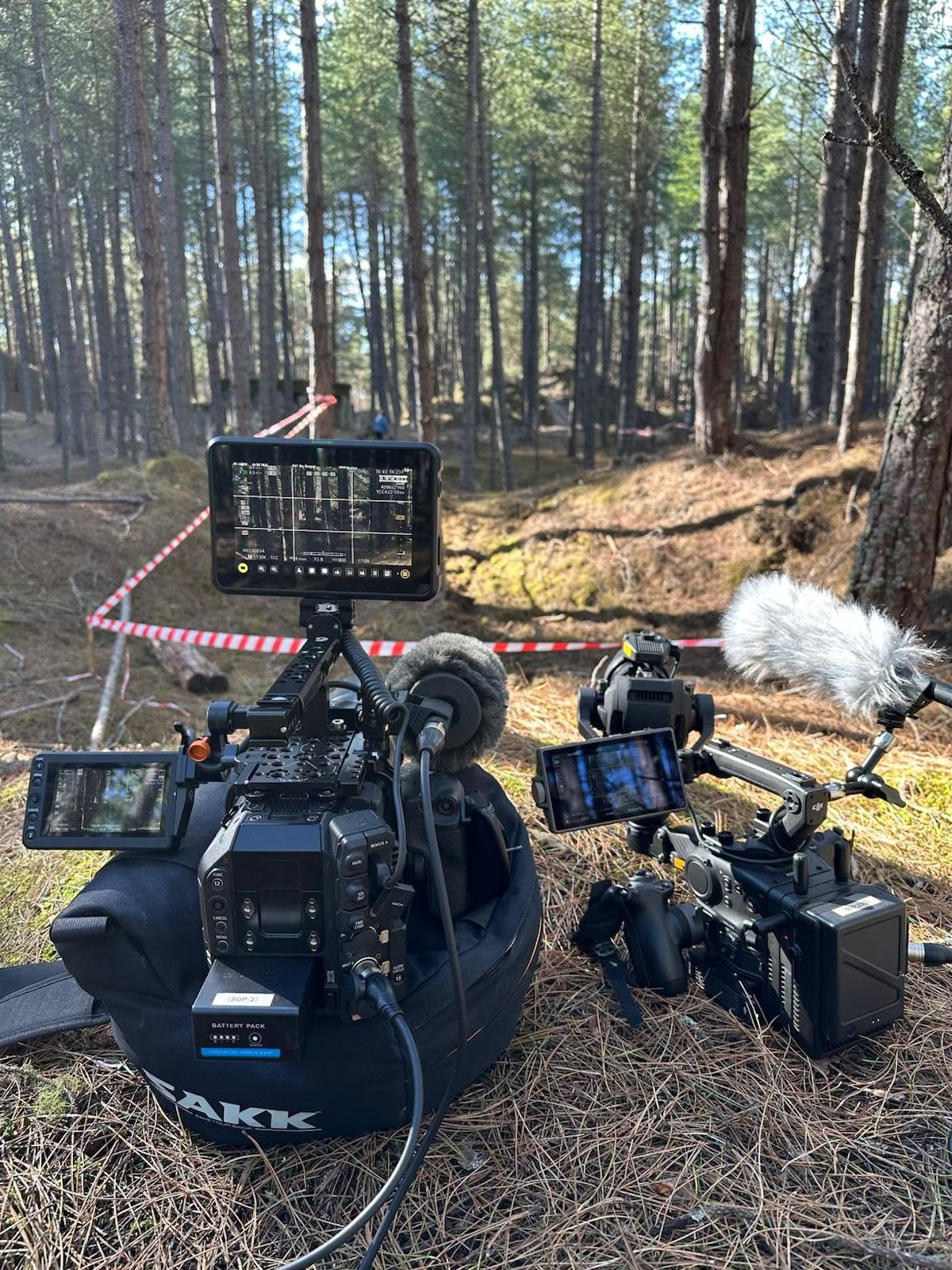
An assistant normally operates the Ronin while I work with the Canon and the drone. At times, they’ll also operate the Inspire 3’s camera while I fly it.
A view from above
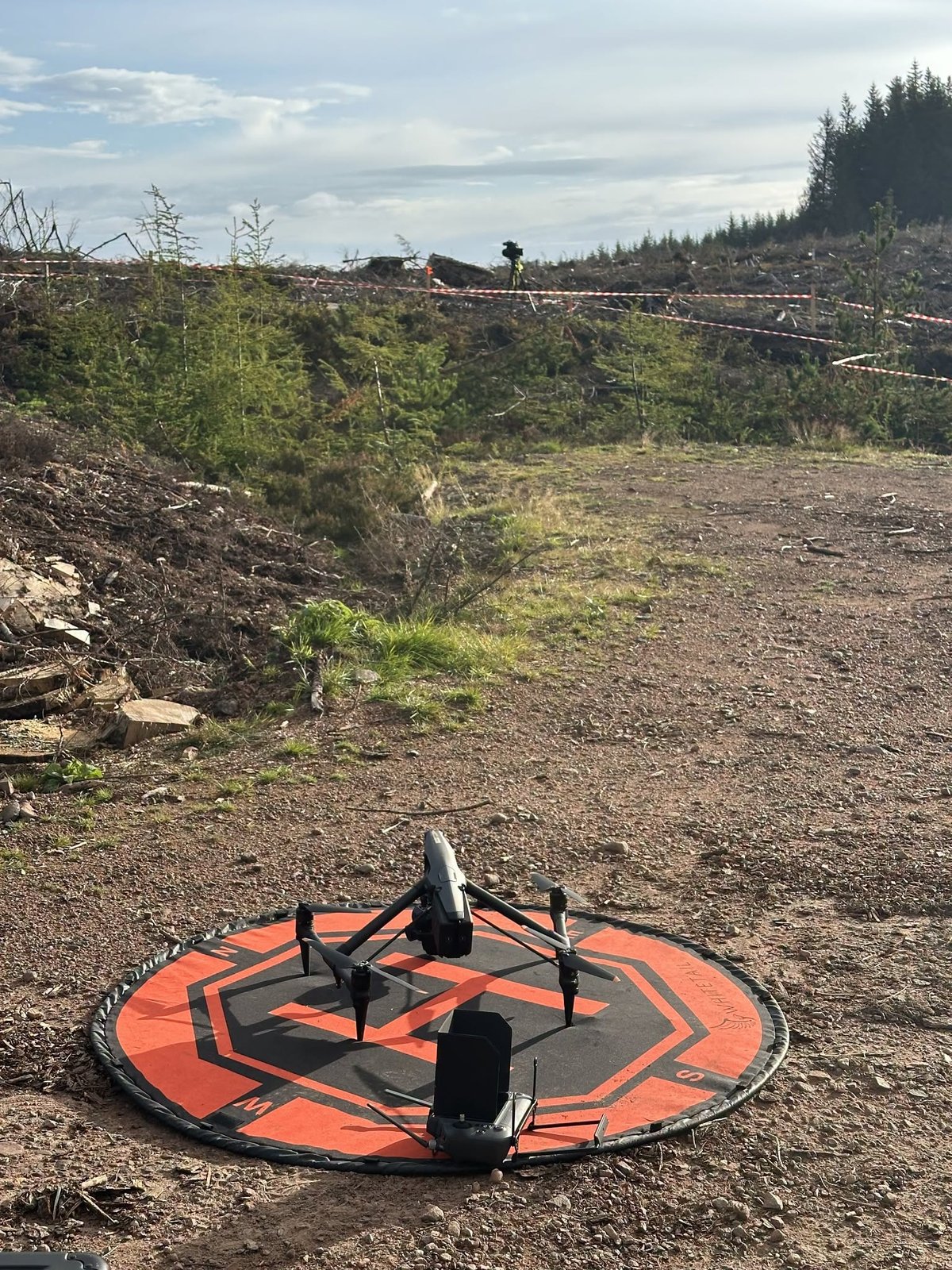
At Drumtochty I used a Whitetail take-off mat to help keep loose material kicked up by prop wash away from the drone. The mat is weighted so it stays put.
Rain, hills and a chance to put my feet up
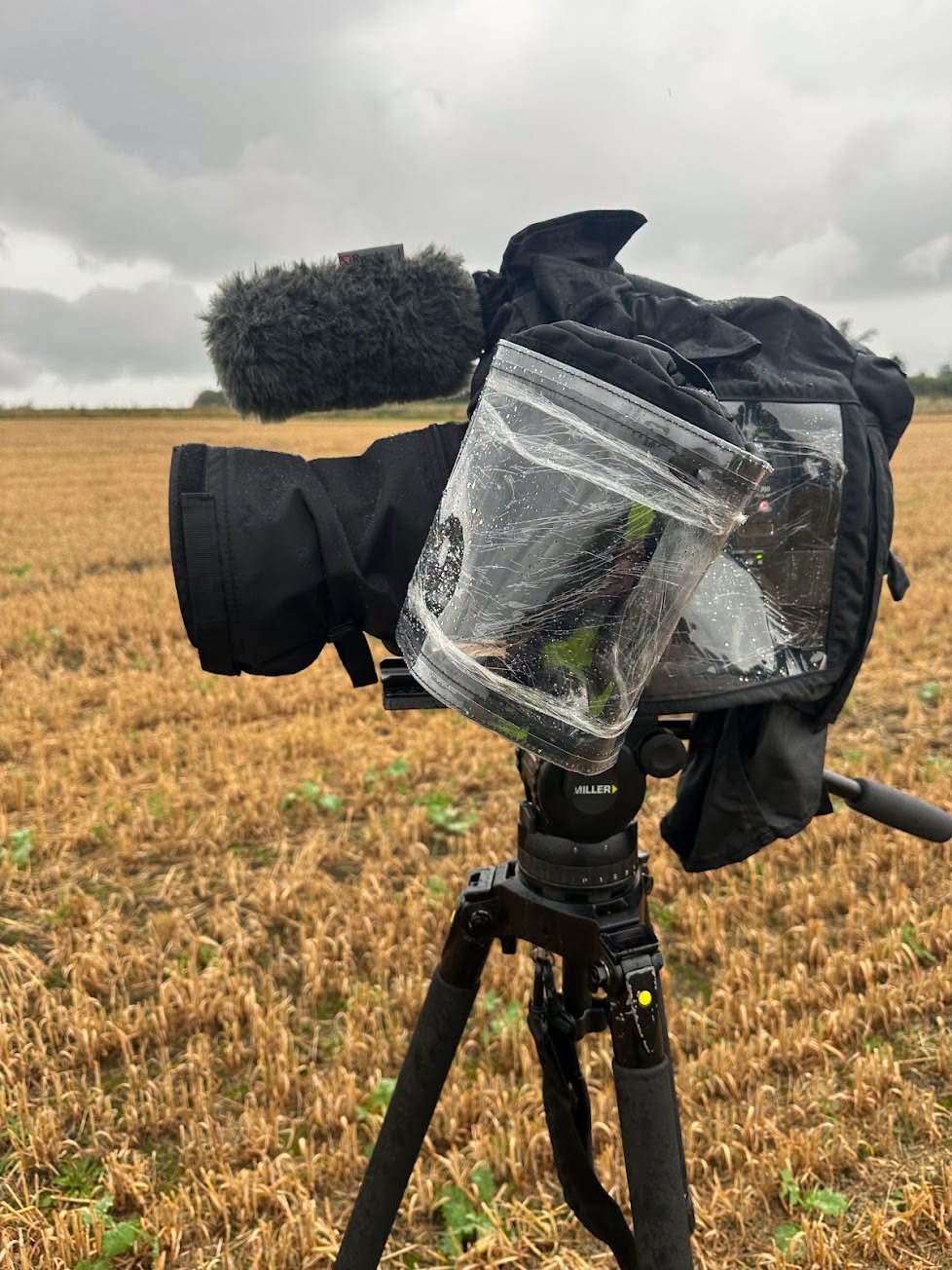
At Wooler, the heavens opened and the rain cover went on. The camera stayed drier than me.
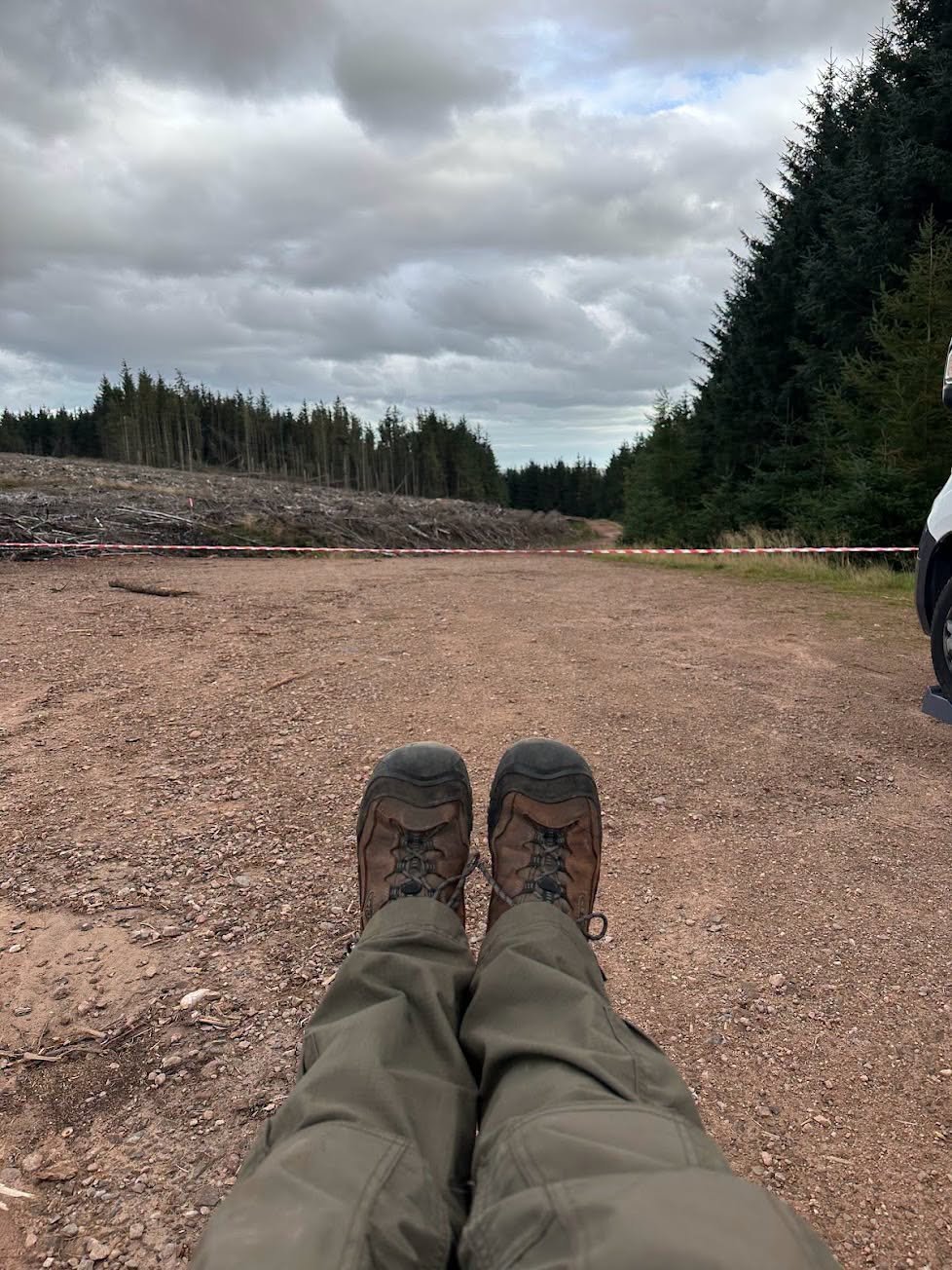
Drumtochty involved plenty of steps on a hillside. The feet-up photograph records a welcome pause in the day. There’s plenty of moving around between the shots that end up in the film.
Keeping camera accessories organised
The cameras are easy enough to identify. It’s the smaller accessories—cables, batteries, memory cards, microphones and readers—that can disappear inside larger bags and cases.
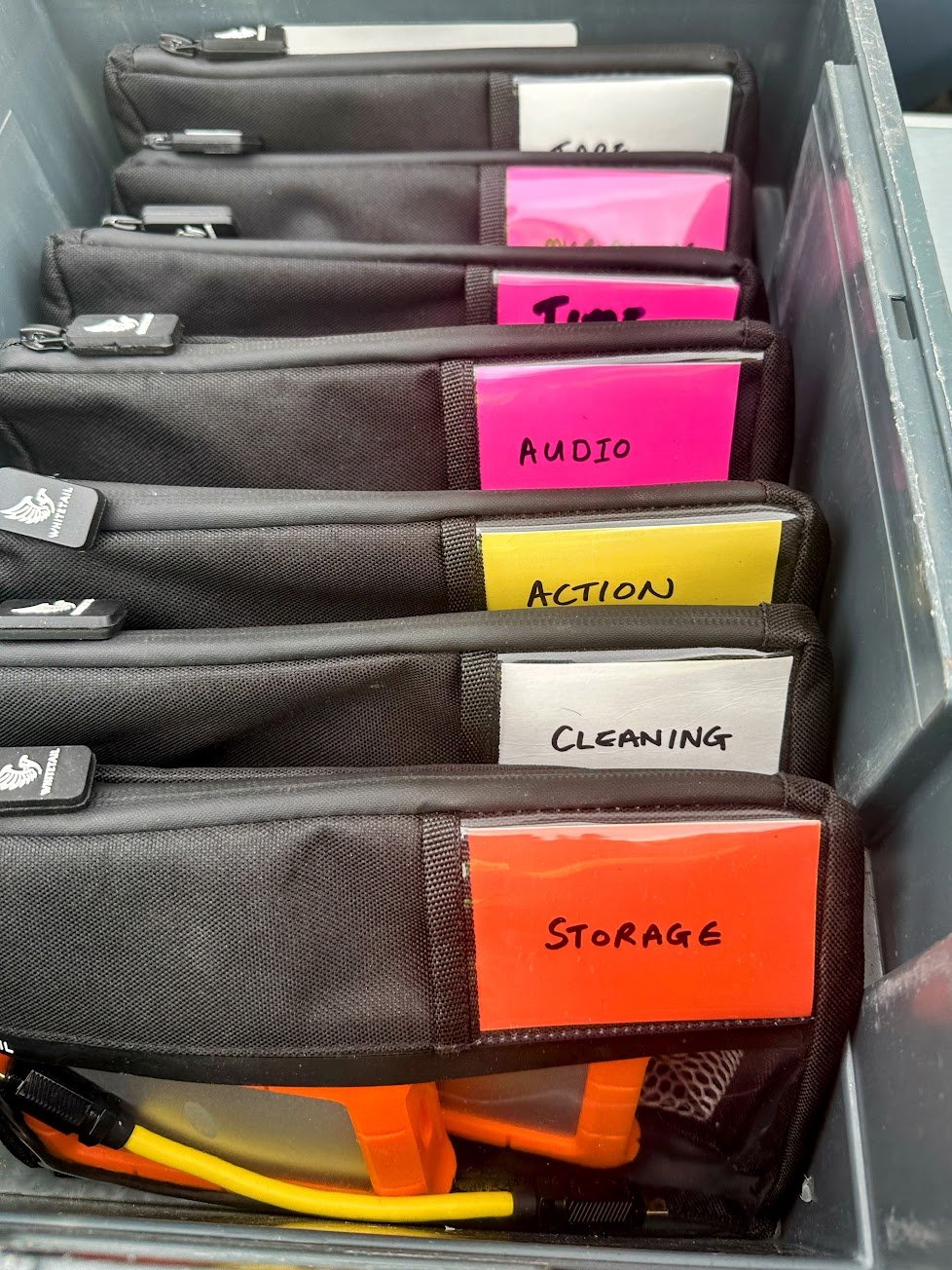
I use labelled Whitetail camera accessory pouches to separate that equipment and keep it accessible. Action-camera accessories, batteries and cards stay together, while DJI and RØDE microphones have separate pouches. They’re part of how I organise my camera bags and cases, keeping smaller filming accessories together and easy to find.
I also keep all the card readers together. The Canon, Ronin 4D and action cameras use different storage, so there are several readers to keep track of. Drone filters have their own pouch too, as the light changes constantly.
This is particularly handy when working with assistants who aren’t using the same equipment every day. I can ask for “the blue pouch labelled Drone Filters” and they know what to look for. It makes finding the right kit much quicker and easier.
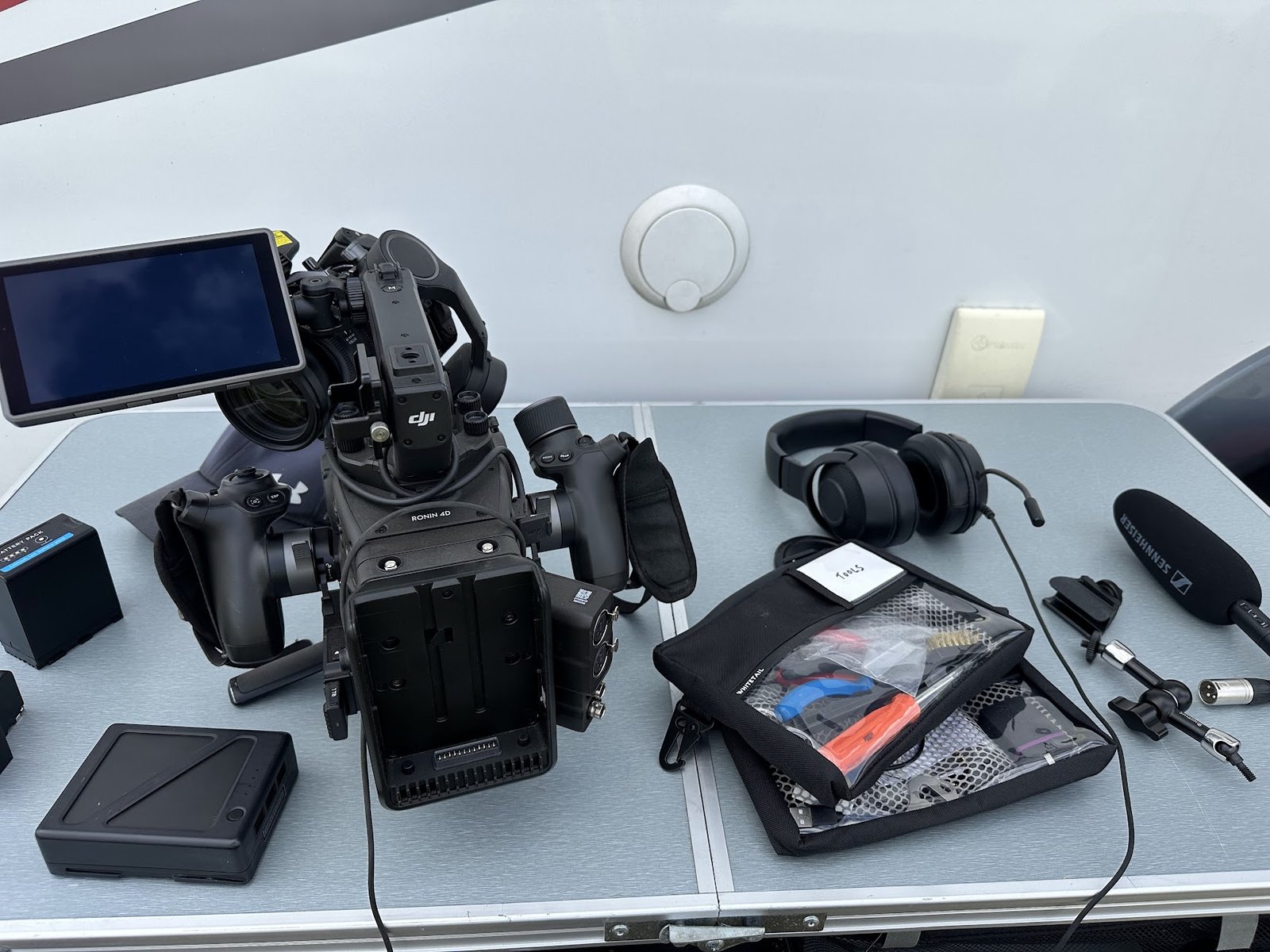
The cleaning pouches probably get used most. I keep two so each operator can have one. The tools pouch is just as important for building cameras, tightening things and changing the setup.
For copying and organising footage, the storage pouch keeps the drives together and within reach. That’s much easier than having them spread through bags and boxes that are difficult to access once we’re travelling.
The race finishes, then the sorting starts
After the racing, it’s time to copy the footage onto external drives and organise it. That normally means a late finish, then repeating the process the following day—sometimes moving the van to reach different locations.
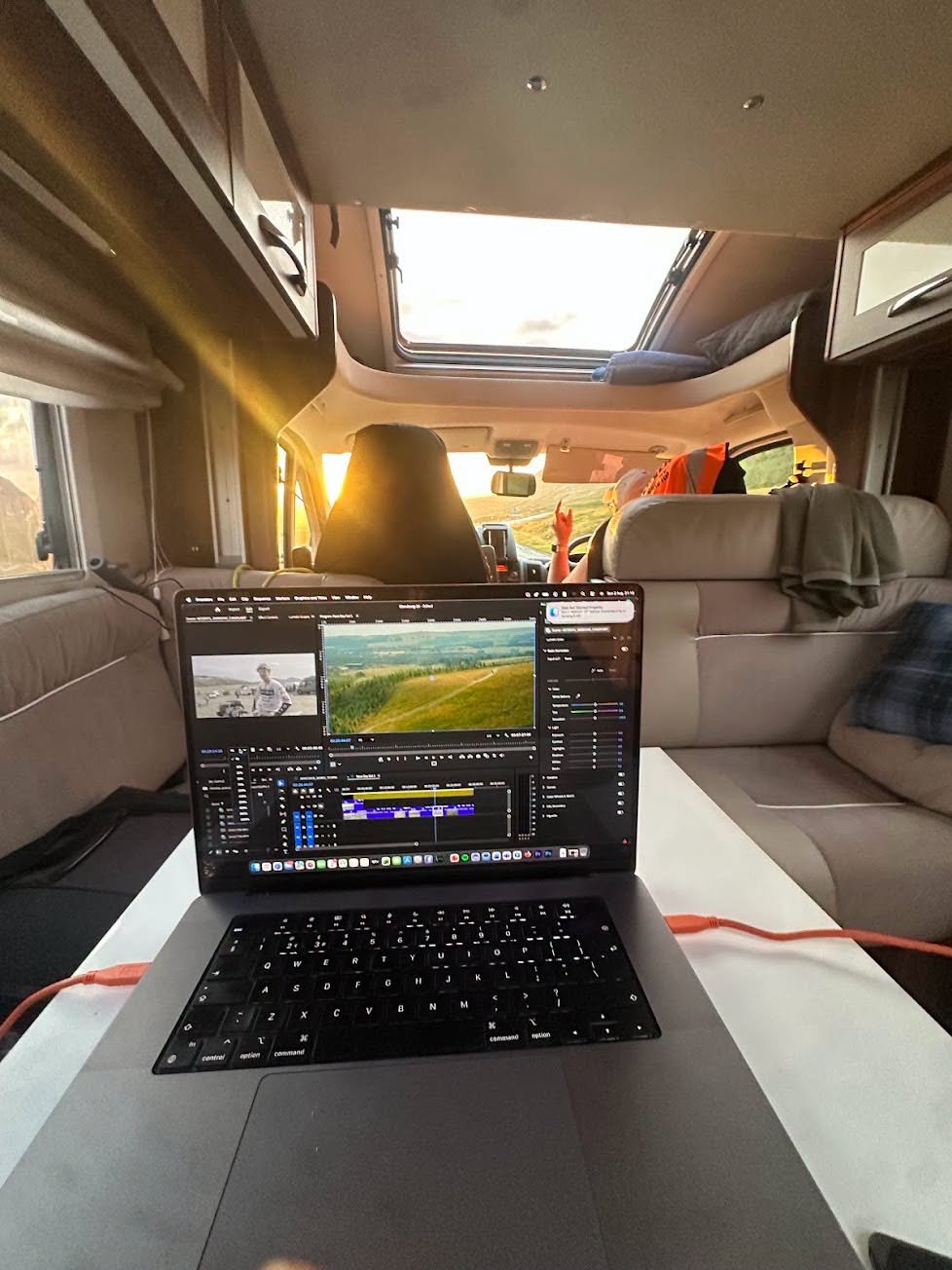
Some events are five to seven hours from home. An assistant takes the wheel on the return journey, and I can start sorting footage and building a rough cut in the motorhome, if I haven’t already started the night before.
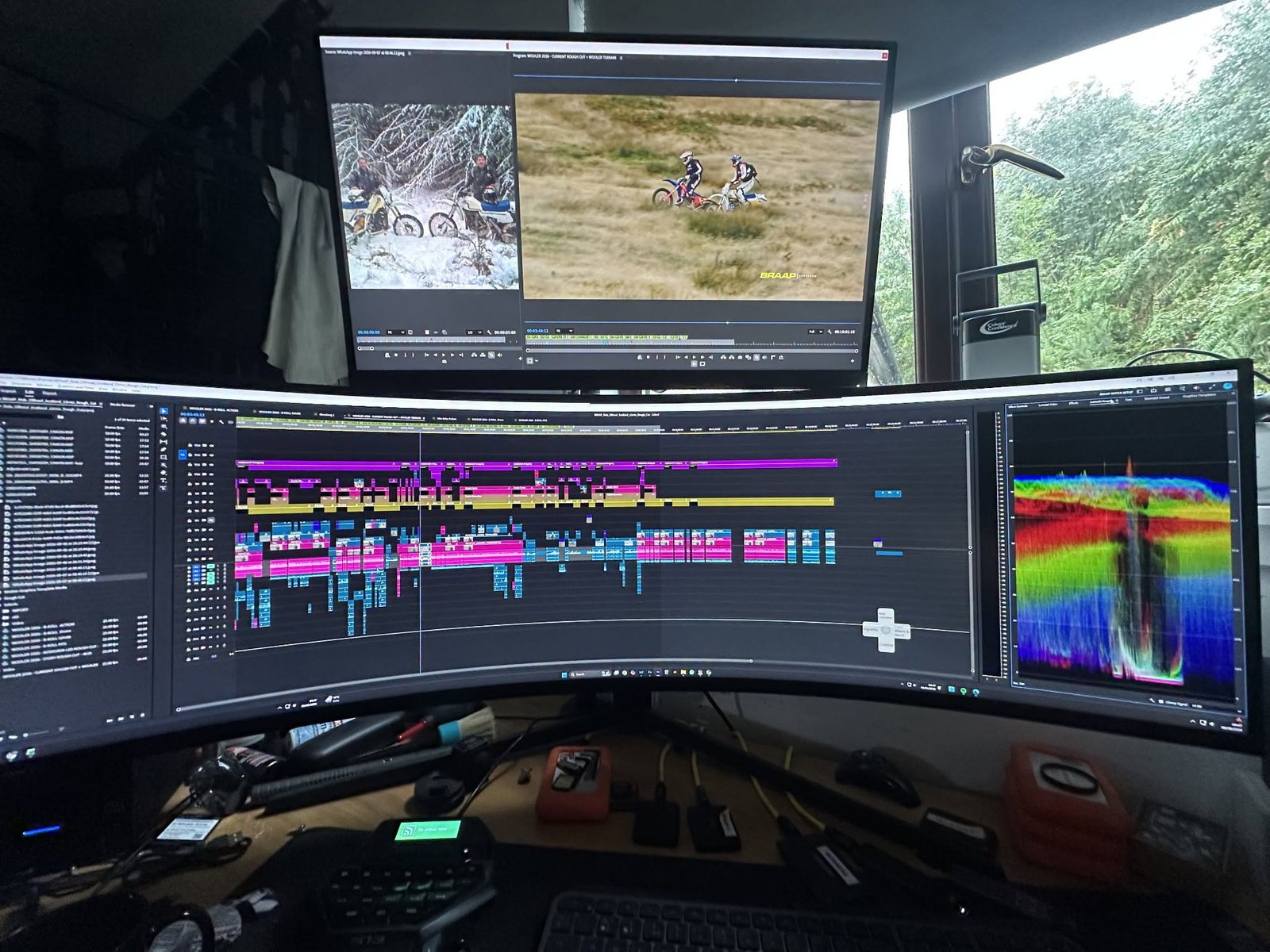
Back at my desk, the 49-inch monitor holds the editing timeline and the screen above is for the picture preview. That’s where the interviews, riding footage and audio come together into the finished film.
Beyond the race course
The cameras have also been out for a community event in Glenrothes about illegal riding and what can be done, involving police, Kingdom Offroad and councillors.
Another project has been interviewing Donald MacFadyen for a film due in 2027.
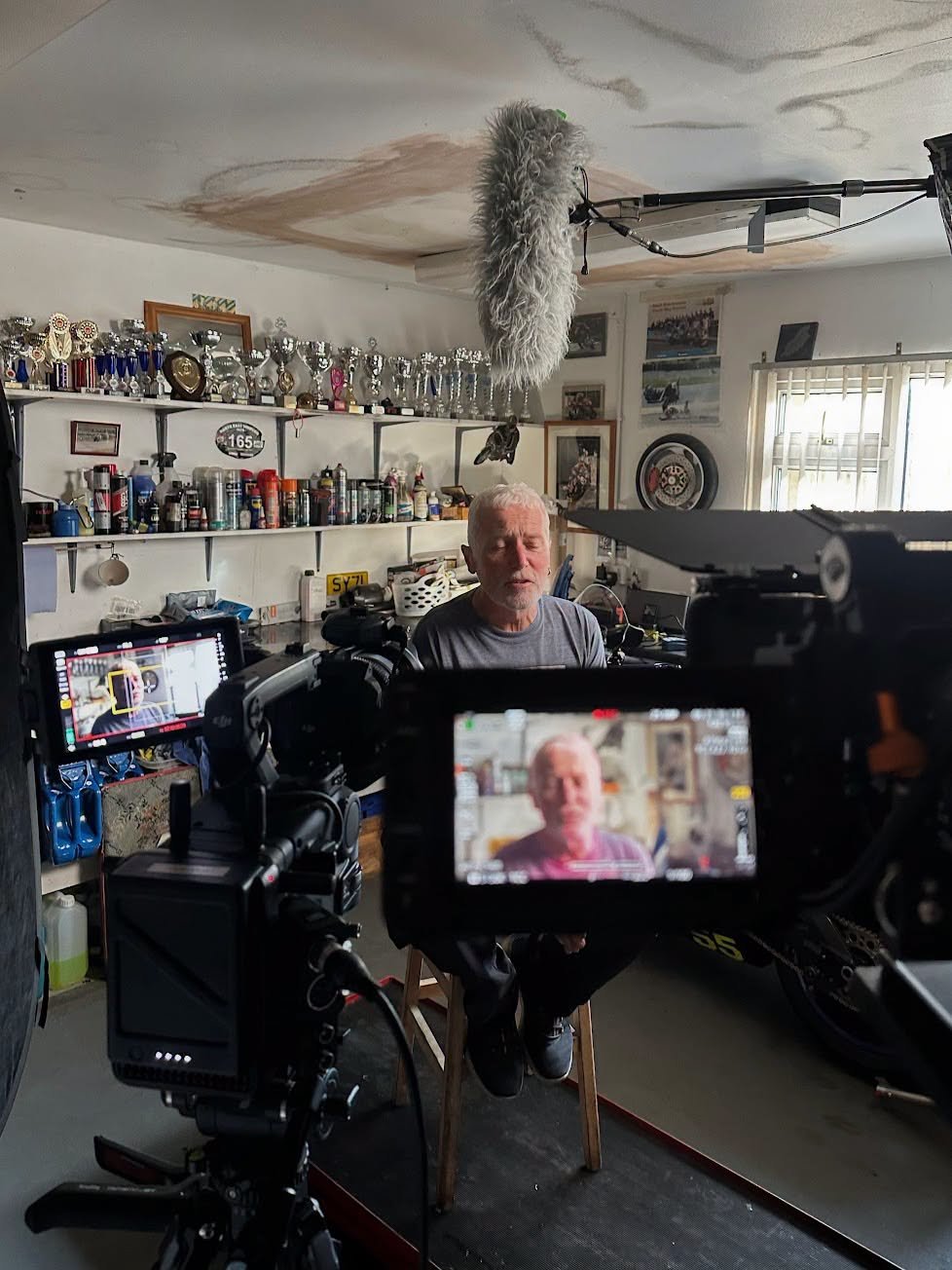
The riding gives us the action, but the people around it give me plenty of reasons to keep the cameras rolling.
Explore more BRAAP stories and see the people and events on the other side of the camera.
