

BRAAP SCOTLAND • TRIALS • BEGINNER GUIDE
Trials might look like a specialist corner of off-road motorcycling, but the skills it teaches are some of the most useful on any motorcycle. Balance, clutch control, throttle control, braking, body position and choosing a line all become part of every ride.
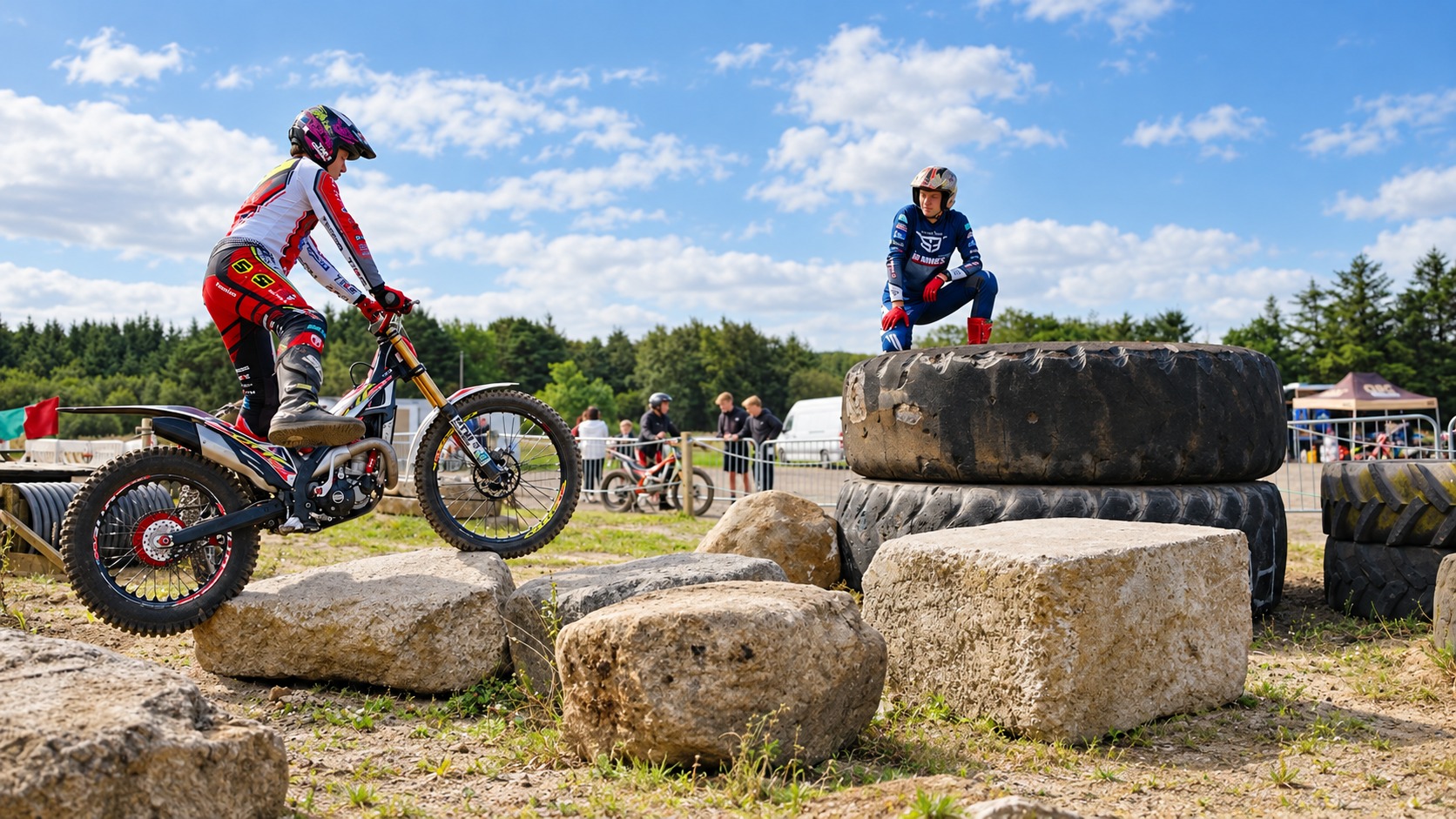
Why trials is such a good place to learn
A lot of off-road riding gets easier when the basic controls stop demanding all of your attention. Trials is built around those basics. Riders are constantly using the clutch, throttle and brakes together while moving their body around the motorcycle and reacting to changes in grip.
Because so much of that work happens at relatively low speed, it gives riders time to feel what the motorcycle is doing. You learn what happens when the rear tyre begins to lose grip, how small clutch movements change drive, and how much difference body position makes before speed starts hiding mistakes.
Clutch control becomes second nature
Good clutch control is one of the foundations of off-road riding. In trials, the clutch is not simply something you use to pull away. It becomes a precise control for managing drive to the rear wheel.
That means learning to feed power in smoothly, remove it quickly when the bike starts to push, and combine the clutch with a steady throttle rather than relying on big bursts of power. Those habits carry directly into slippery climbs, technical Enduro terrain, slow trail riding and awkward starts on almost any motorcycle.
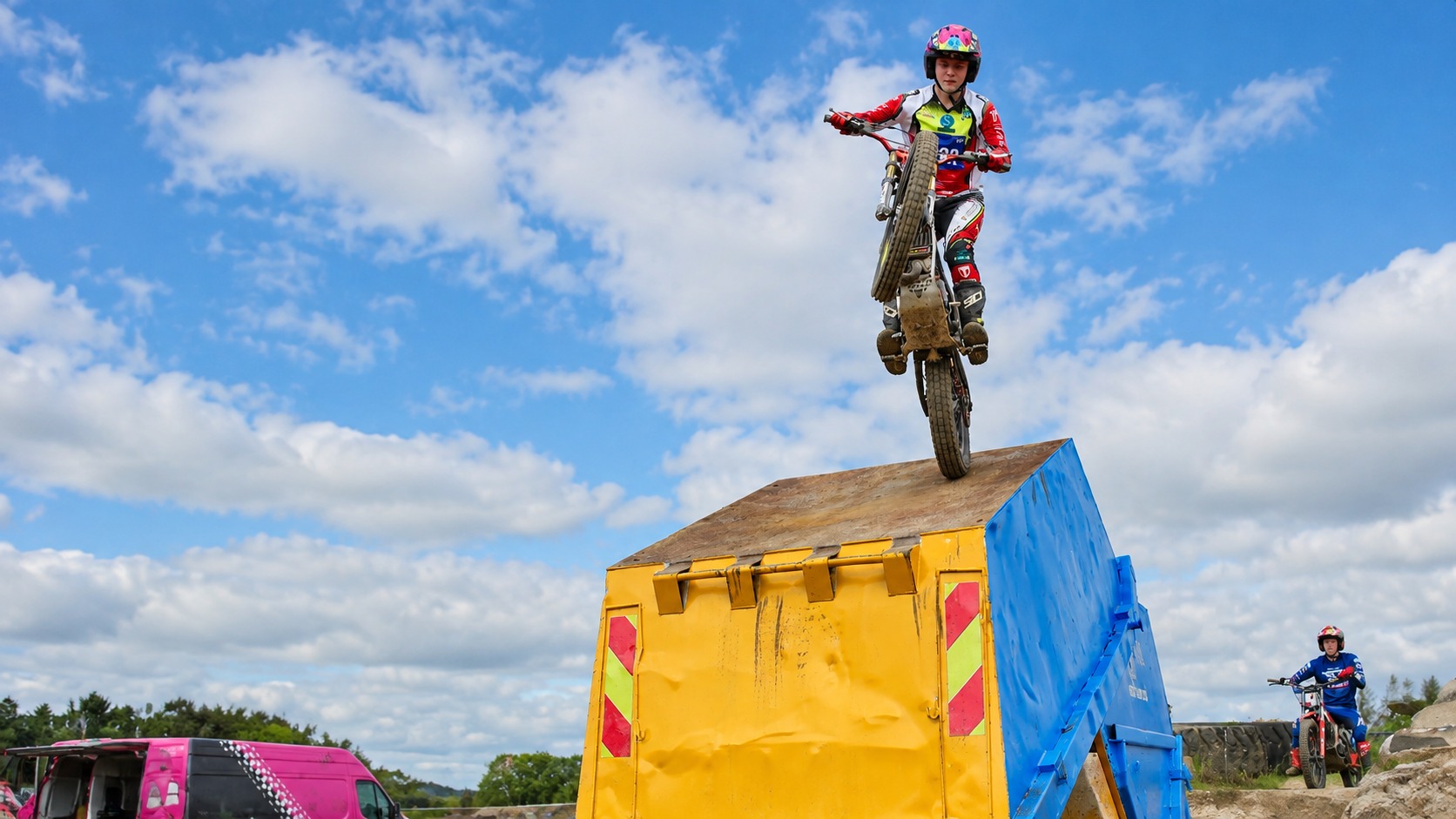
Balance and body position matter more than speed
Trials quickly teaches you that the motorcycle does not have to be held upright by brute force. Small movements through the feet, knees and hips can change how the bike reacts underneath you.
Standing on the pegs, keeping your weight where the tyres can use it and allowing the motorcycle to move independently beneath you are all useful habits. The same principles appear when an Enduro rider crosses roots, a motocross rider stands through braking bumps or an adventure rider picks a careful line over rough ground.
You learn to look ahead and choose a line
A trials section forces riders to think before they move. Where is the grip? Which rock gives the smoothest approach? Where does the front wheel need to land? What position does the bike need to be in for the next turn?
That habit of looking ahead instead of staring directly at the front wheel is transferable across off-road riding. Good riders are rarely reacting to the obstacle immediately underneath them; they are already setting themselves up for what comes next.
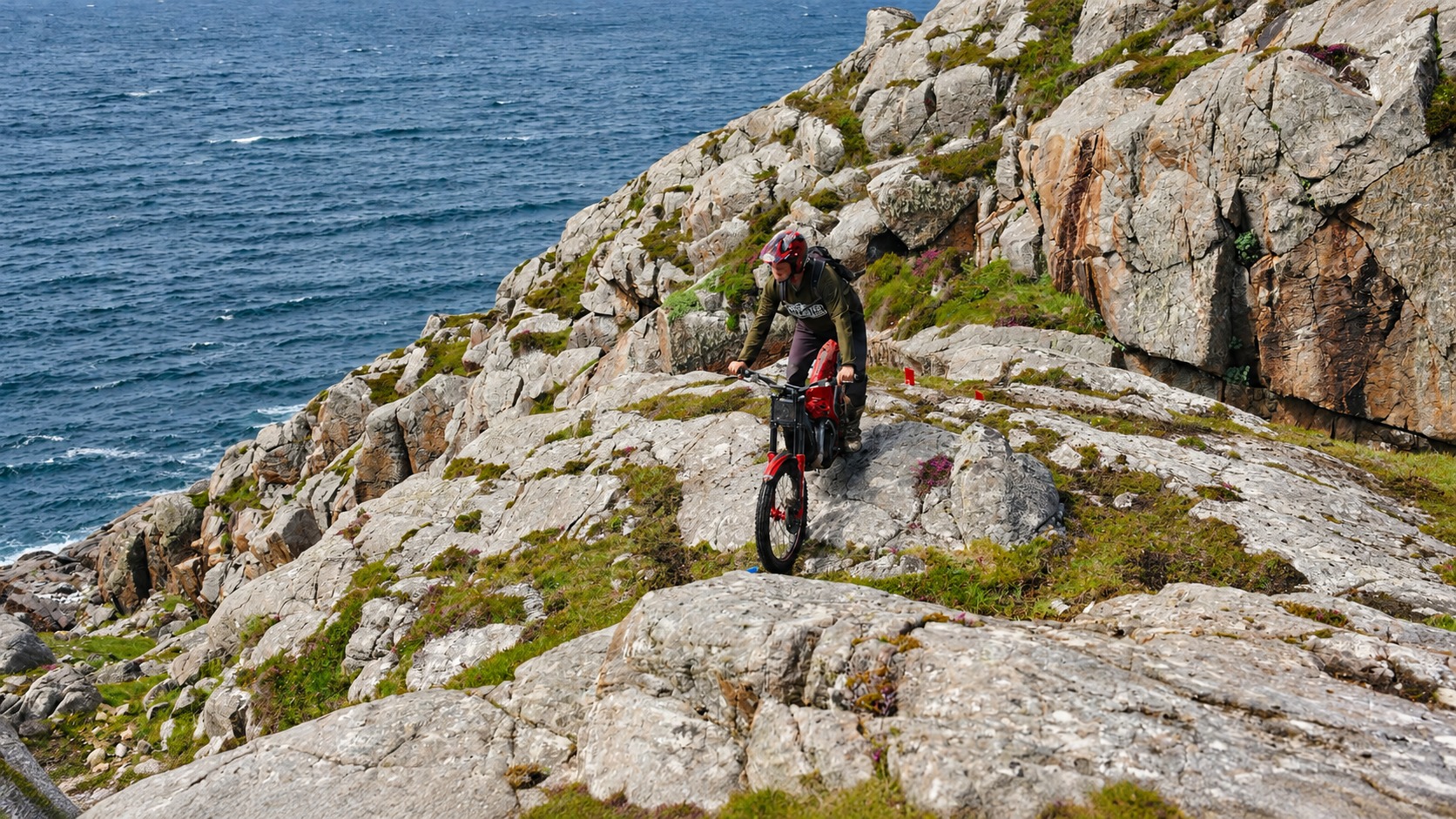
Obstacles stop feeling like obstacles
Logs, rocks, steps and banks can be intimidating when you are new to off-road riding. Trials breaks them down into technique.
You begin to understand how to lighten the front wheel, when to compress and release the suspension, where the rear wheel needs to meet an obstacle and how much drive is actually required. At a beginner level that does not mean learning huge competition-style moves. It means building enough control that a small rock or step no longer causes panic.
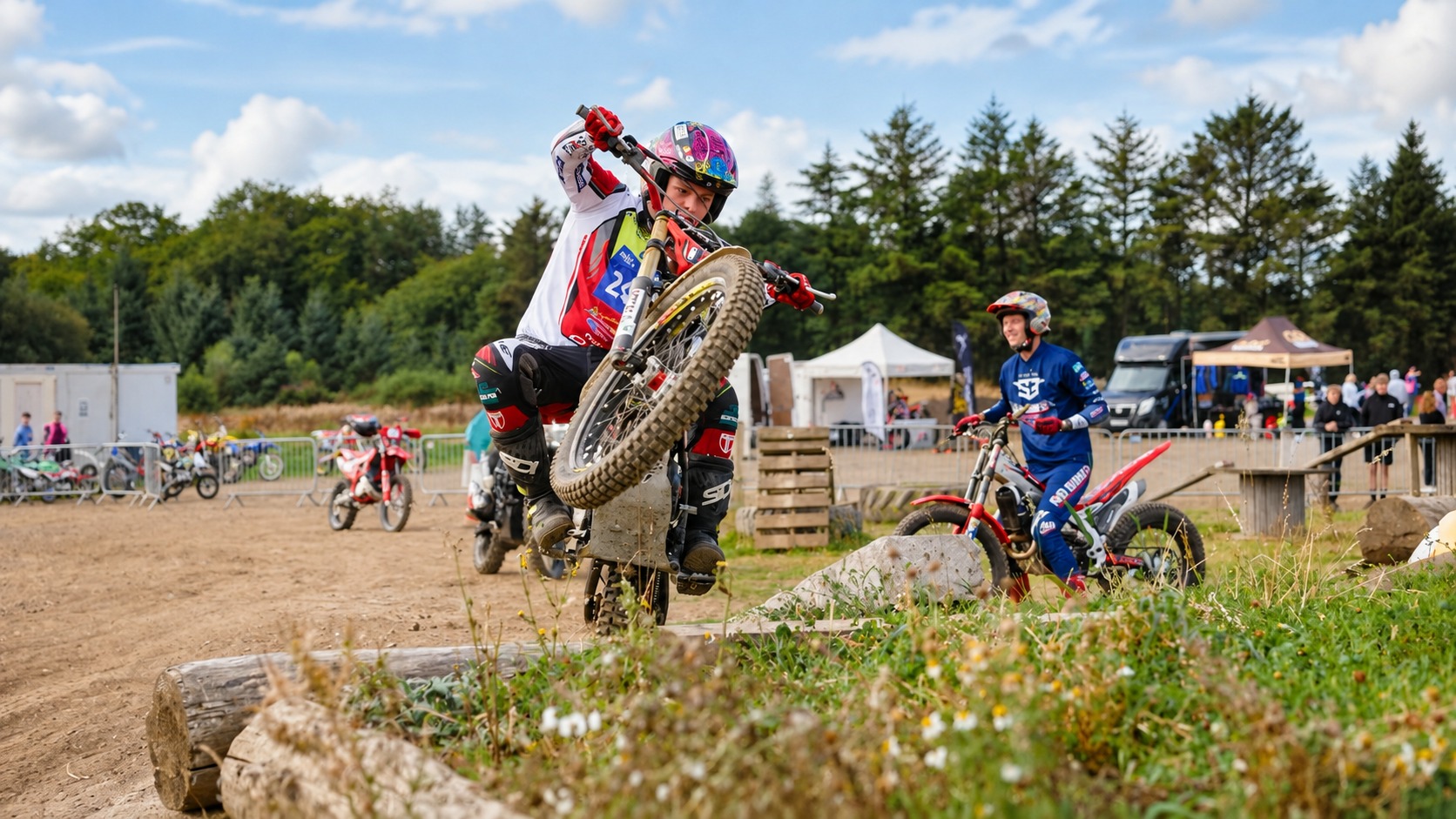
The skills transfer into other disciplines
Trials is its own sport, but the fundamentals do not stay inside a trials section. A rider who becomes comfortable balancing at walking pace, controlling drive with the clutch and placing the wheels accurately has useful tools for almost every other type of motorcycling.
- Enduro: better control in technical climbs, rocks, roots and tight going.
- Motocross: improved standing position, balance, braking control and confidence when the bike moves underneath you.
- Trail and adventure riding: more confidence during slow turns, uneven surfaces, awkward cambers and low-speed manoeuvres.
- General road riding: smoother clutch work, better low-speed balance and more accurate control of the motorcycle.
You do not need to start with huge obstacles
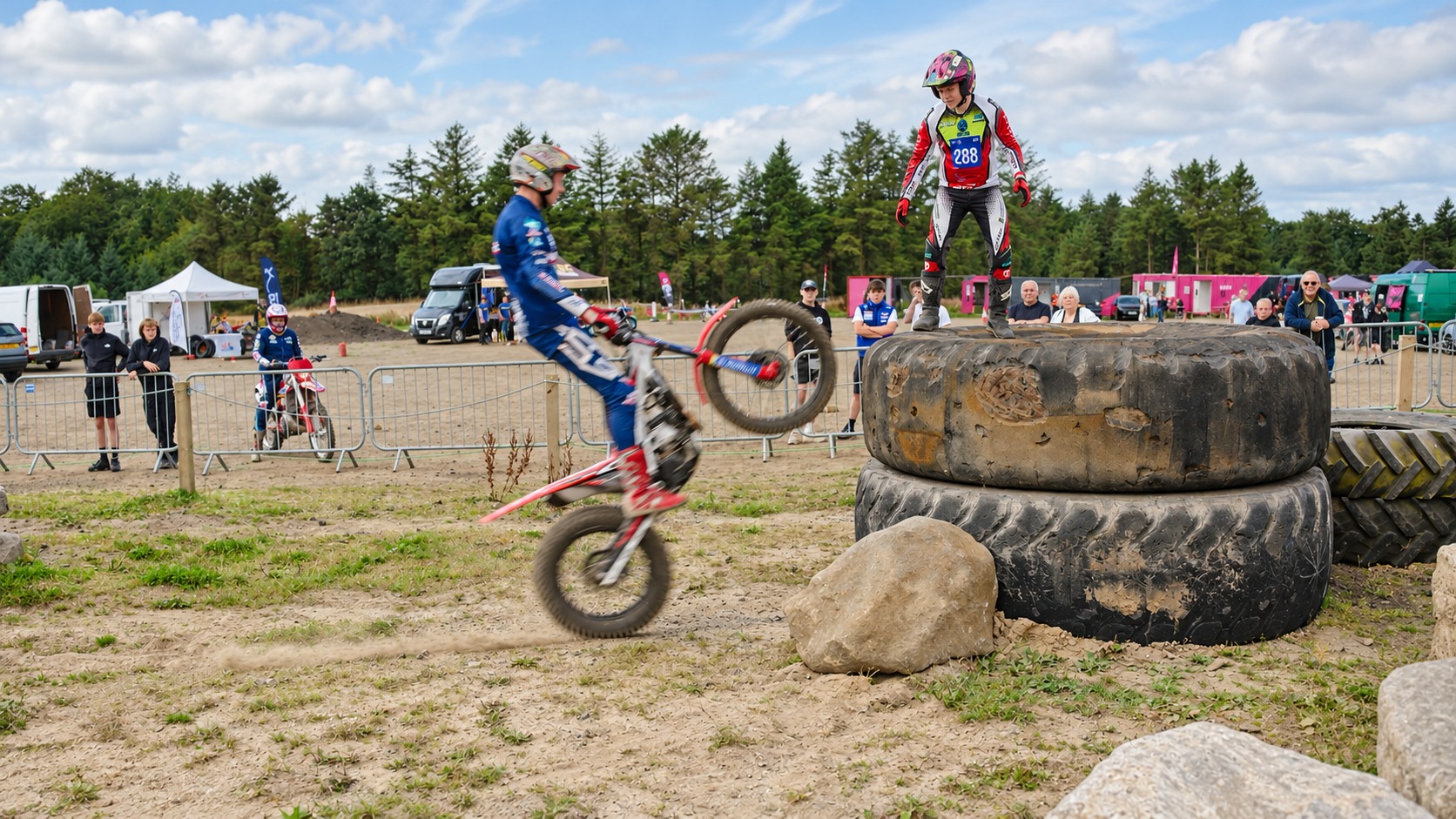
Watching experienced trials riders can give the wrong impression of what learning the sport looks like. Big steps, tyre stacks and dramatic rock sections are the result of years of practice, not the starting point.
A beginner can get a huge amount from simply learning to ride slowly in a straight line, turn tightly, stop without immediately putting a foot down, control the clutch and ride over small changes in terrain. The difficult-looking techniques are built from those same fundamentals.
Is trials the only good way to start?
No. Plenty of riders start in motocross, Enduro, trail riding or another discipline and build excellent bike control there. Trials is not a compulsory first step.
What makes it particularly useful is the concentration on technique at low speed. If your goal is to become more comfortable and precise on a motorcycle before adding more speed, trials is difficult to beat.
How to try trials in Scotland
The easiest route is to speak to a local club, training provider or experience venue before buying a motorcycle. Ask whether they have beginner sessions, coaching, practice days or an opportunity to watch an event and speak to riders.
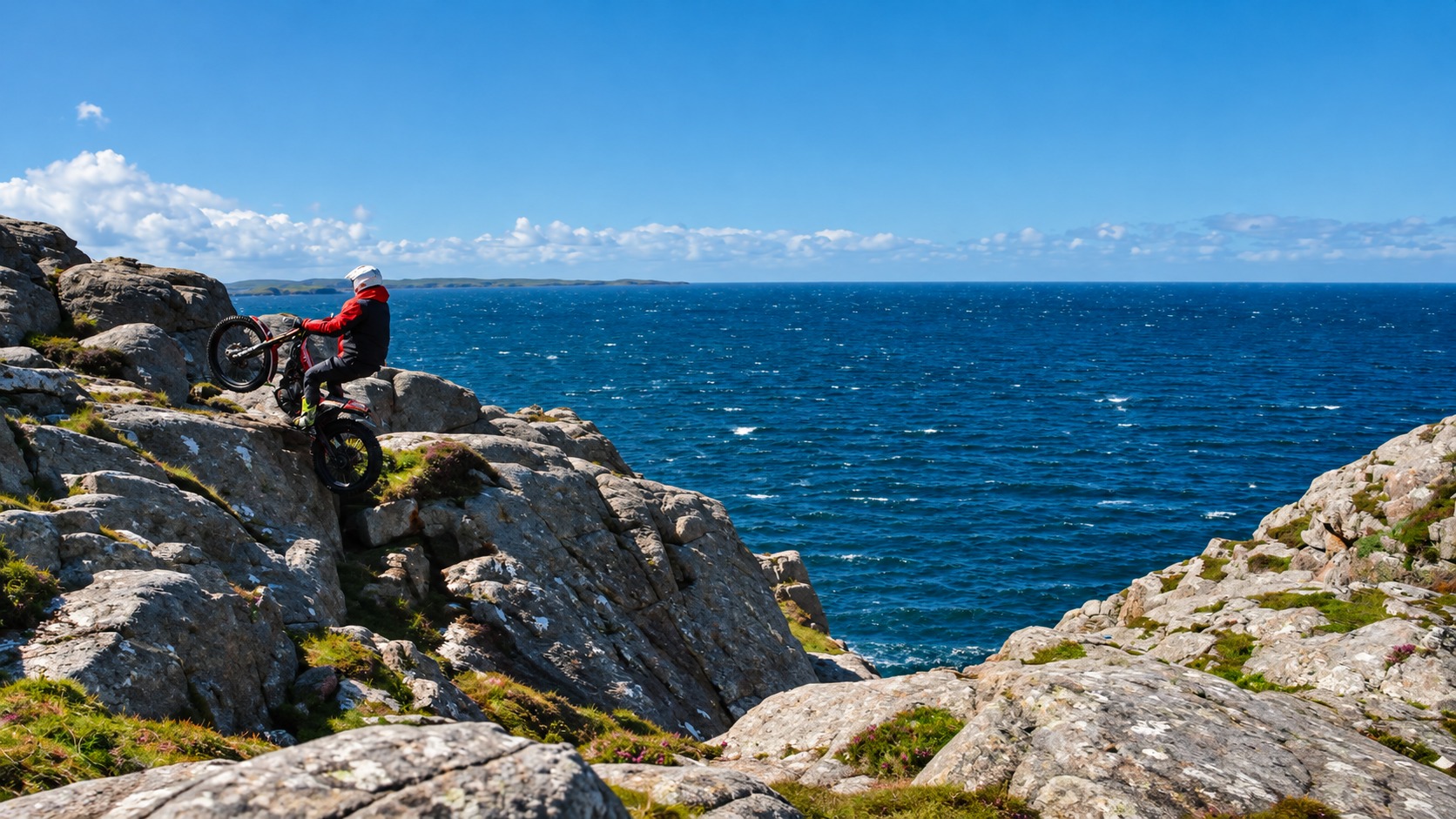
BRAAP's Scottish motorcycle trials guide explains more about the discipline, while the Trials clubs and places to ride page can help you find somewhere to start. If you want to understand how events are scored, see Motorcycle Trials Scoring Explained.
START HERE
Build the fundamentals first.
You do not need to be hopping onto tractor tyres to benefit from trials. Learning smooth clutch control, balance, braking and line choice can make every other kind of riding easier to understand.
